It will not turn on at all
No response from the thermostat, or the system tries and gives up. The cause sits in the ignition sequence, the controls, or the power supply.
 GVK Heating & Air Inc
(619) 277-6279
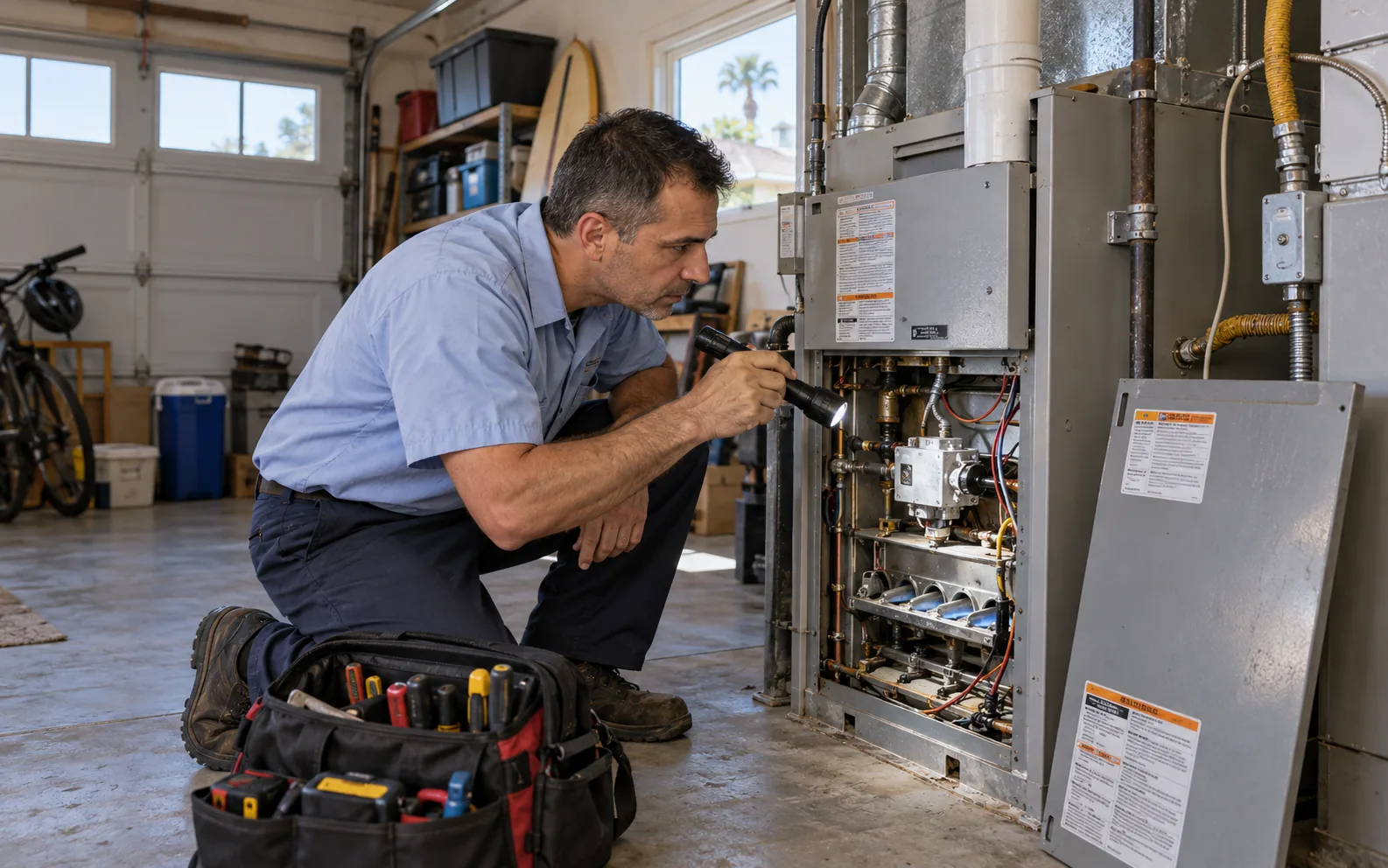
Heating faults here turn up on the first cold night, after the system has sat unused for ten months. Tell us what it is doing and we will find the fault, show you what failed, and put the price in writing before we touch anything.
Six things homeowners call us about. None of them is a diagnosis on its own, because the same symptom comes from several different faults.
No response from the thermostat, or the system tries and gives up. The cause sits in the ignition sequence, the controls, or the power supply.
The blower is working and the burners are not doing their part. Have it checked before you keep running it.
Something in the safety chain is stopping it. That is the system protecting itself, and resetting it does nothing about whatever tripped it.
Dust burning off is normal and passes within an hour. Anything else is not normal, and a burning or sharp smell means shut it off and call.
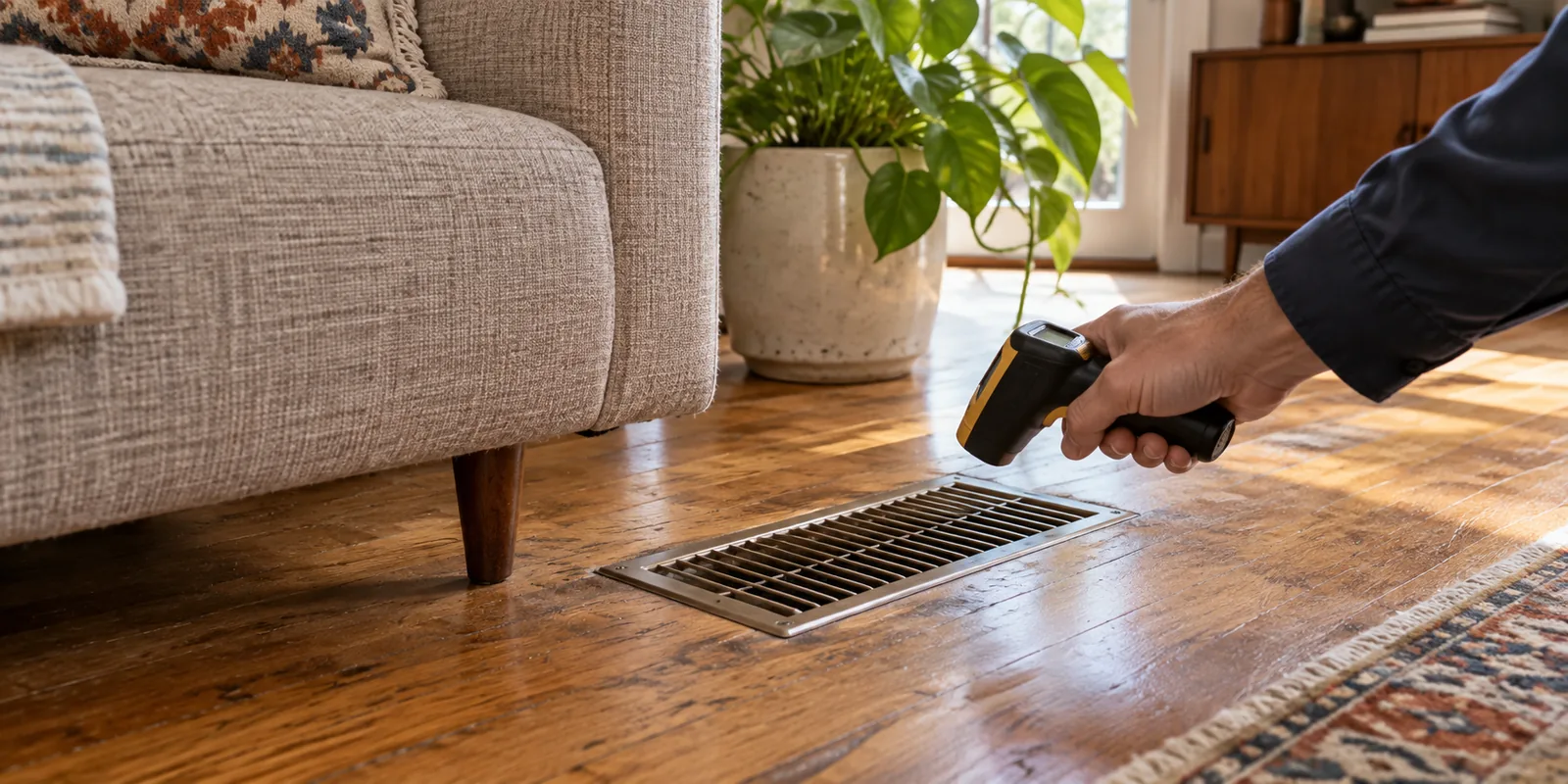
The equipment may be fine. Uneven heat usually points at airflow and ductwork, which is a different job from a furnace repair.
A system working harder for the same result shows up on the bill before it shows up as a breakdown.
Seven groups of faults, what we check in each, and where a diagnosis can land.
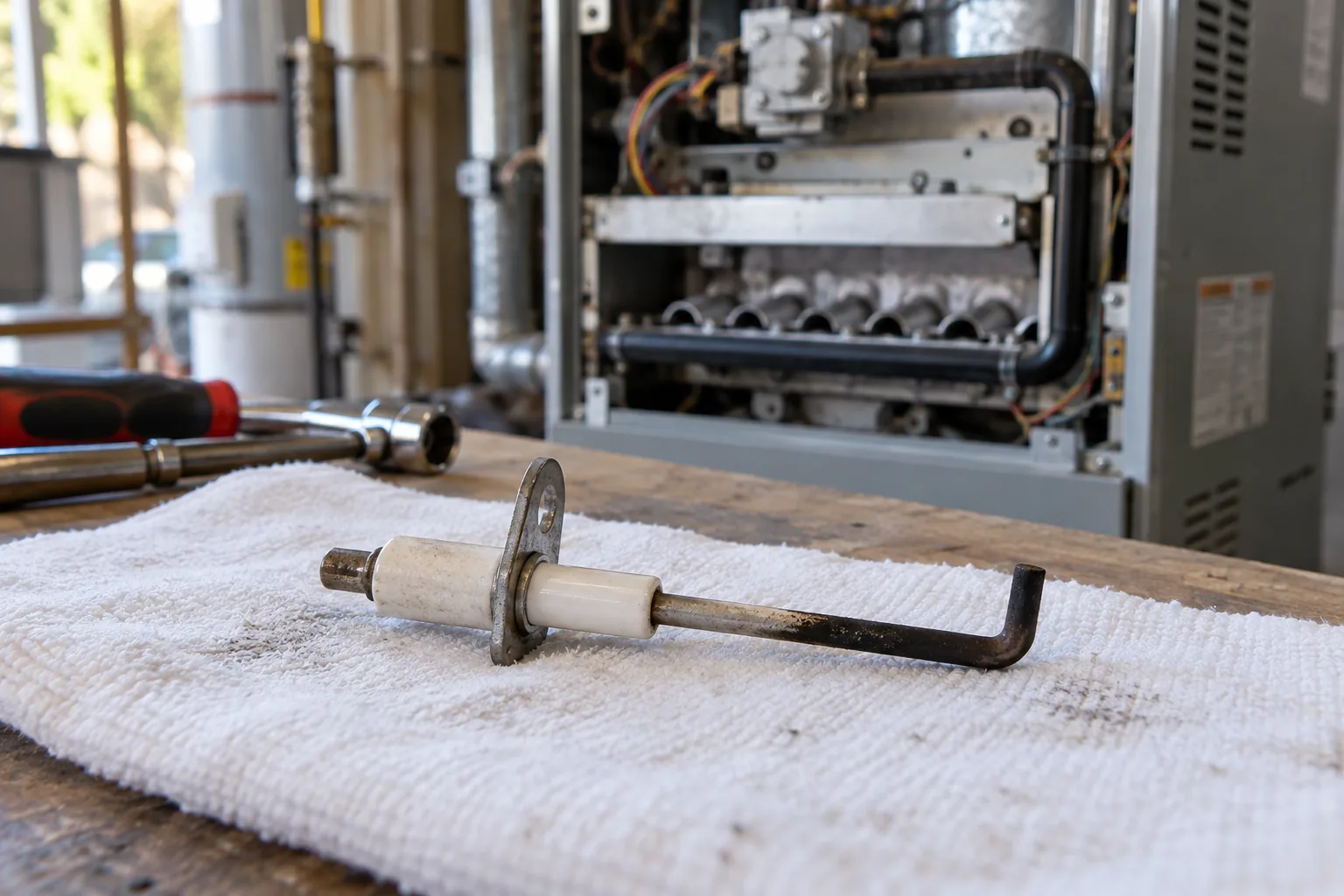
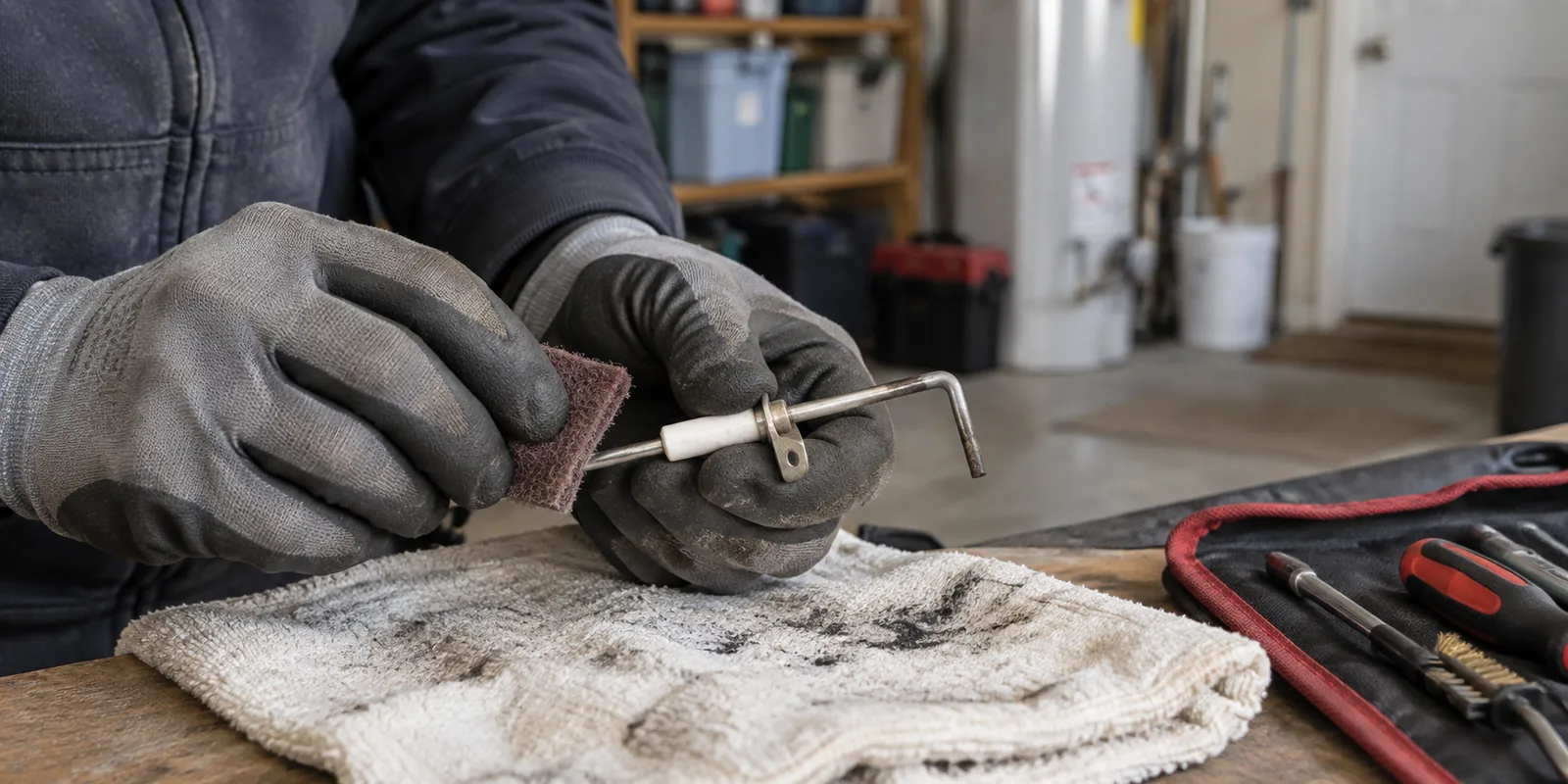
Igniters and flame sensors. A large share of no-heat calls come down to a dirty flame sensor or a failed igniter, and both are same-visit fixes.
The gas valve, the supply pressure, and the firing sequence. We confirm the system is being asked to light and is able to.
Limit switches, pressure switches, and rollout switches. When one of these stops the furnace, the switch is usually doing its job and the cause is somewhere else.
We test combustion and check for carbon monoxide on every heating call, whether or not that is why you called. A cracked heat exchanger is the one furnace fault that matters more than money, and it cannot be seen without opening the unit.
The blower motor, the wheel, and the restrictions that make the system cycle on its limit switch.
Including systems where the thermostat is the only thing that was ever wrong.
Blockages, corrosion, and connections, which matter for both performance and safety.
We are a C-20 contractor, so HVAC is the only thing we do. There is no plumbing division to hand you off to.
Where the diagnosis lands depends on what it finds: a repair we can price on the spot, a part we need to source, or a conversation about whether this furnace is worth another repair.
We are on your side on this one. Most heating calls we go out to are worth repairing, and when that is the case, we repair it and say so.
There is a real question worth answering here: is it worth repairing a furnace you run five times a year? Usually yes, and for a reason that is easy to miss. Light use is not gentle use. The system sits idle for ten months, and the parts that fail here are the ones that fail from sitting: igniters, flame sensors, and switches. Those repairs are small. A furnace in Poway can run for a long time on small repairs, and replacing it early rarely pays for itself in fuel savings, because you are not burning much fuel.
Replacement becomes the better answer when the heat exchanger has cracked, when parts for your model have been discontinued, or when the furnace is in the fifteen to twenty year range and the repairs are coming one after another. If you are also replacing the air conditioner, it is worth pricing both together, and worth asking whether a heat pump covers both jobs with one system.
We bring the repair price and the replacement price to the same visit and go through both with you. If replacement is the direction, that continues on our Furnace and Heating Replacement page.
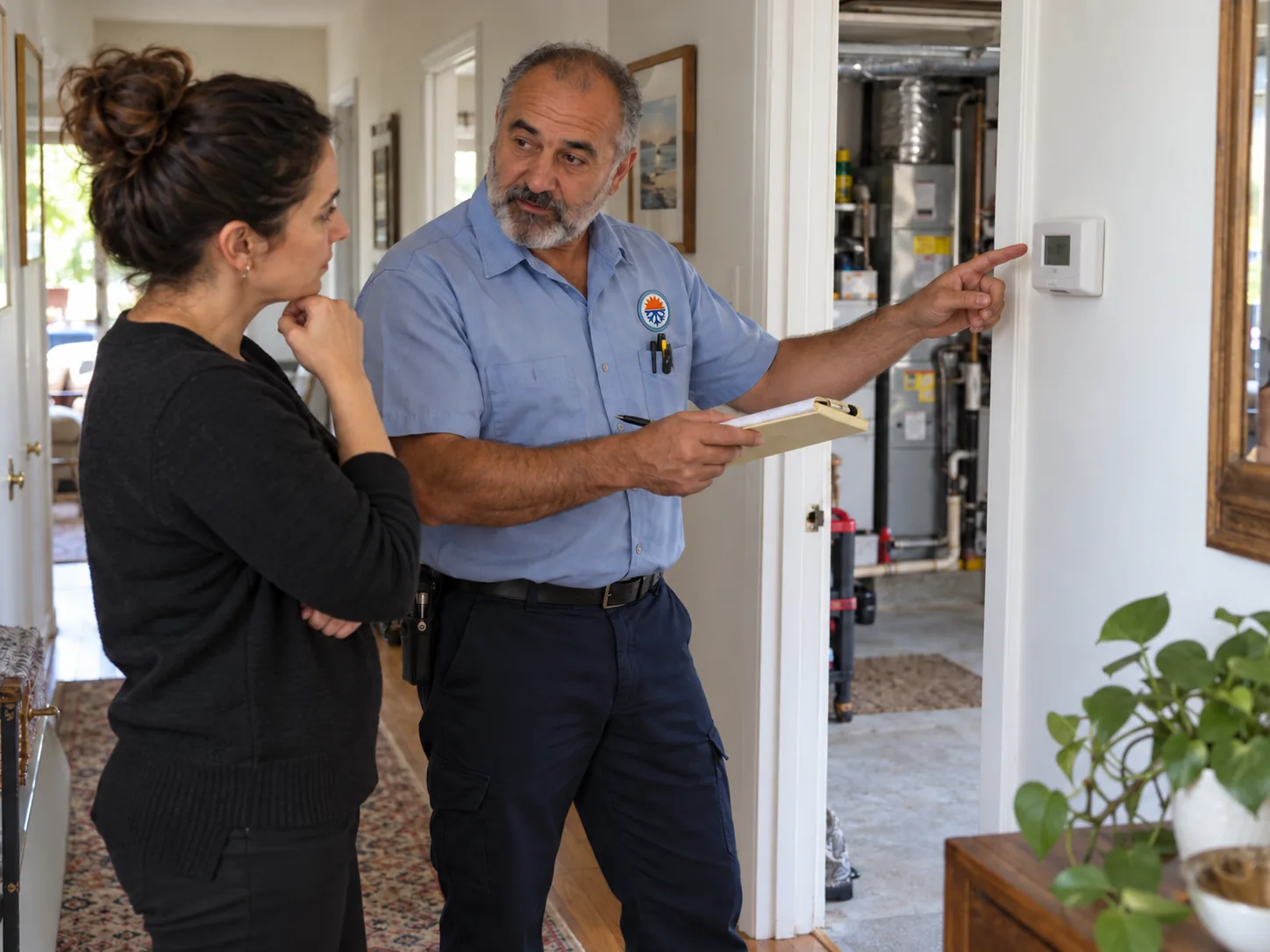
Two minutes on the phone so we arrive with the right parts. If there is a burning smell or the system keeps tripping a breaker, say so first.
Always in that order. A price named against a symptom is a guess, and you are the one who pays for the guess.
We photograph the failed component and show it to you, then we talk about price.
Before any work starts. If the repair turns up a second problem, that comes back to you before we go further.
We run the full heating sequence, test combustion, confirm the system performs, and tell you what to watch for.
We price the repair once we know what failed, so the number you get is the number for your fault.
What affects the price
You get the repair price at the end of the diagnostic visit, in writing
Repair price
A second problem found mid repair comes back to you first.
Schedule a Diagnostic Visit
We find the cause first. Nothing gets quoted against a symptom, and nothing gets recommended before we know what failed.
This is part of every heating visit, whether or not you asked for it. The one fault that matters more than money is the one you cannot see.
We photograph the failed component and show it to you, along with what happens to the rest of the system if it stays that way.
The scope and the number are in writing before anything starts. A second problem found mid repair comes back to you first.
License #911659, bonded and insured. A 4.9 rating across 300+ reviews on Yelp and Google, and 600+ permitted projects on public record in San Diego County.

“My impression of George is that he's a very honest person who takes a lot of pride in providing a high quality service.”
Read on Yelp
“It was very clear that it was important to him that his service is high quality.”
Read on Google“We live in South Orange County and GVK Heating and Air were recommended to us — specifically Denys at GVK.”
Read on Yelp“They performed the first AC installation on my 30-year-old home.”
Read on Google“He wants to meet your needs at a good price and he is a pleasure to work with.”
Read on GoogleWe are based in Poway and work across all of San Diego County: repairs, replacements, maintenance, and tune-ups.
Ask us what the visit costs when you call and we will tell you before we come out. The repair price comes at the end of that visit, in writing, once we know what failed and have checked the components around it.
Call or send the form and we will tell you the first day we can be there before you commit to anything. Cold nights here arrive in clusters, so the first genuinely cold week of the year is the busiest week of our heating season.
If there is a burning or sharp smell, or the system keeps tripping a breaker, shut it off and leave it off. Otherwise leave it as it is, because a fault we can watch happening is easier to find than one we have to reproduce. If you do not have a working carbon monoxide detector near the bedrooms, get one this week. It costs less than a service call.
Dust settling on a heat exchanger over ten idle months burns off the first time you run it, and that smell clears within an hour. A smell that is sharp, burning, or does not clear is a different matter and worth a call the same day.
It is the one furnace fault where we stop and tell you plainly, because a crack can let combustion gases into the air you breathe. It cannot be seen without opening the unit, which is why combustion testing is part of every heating call we go out on.
Usually yes. In this climate furnaces fail from sitting idle, and light use does not protect them from that. Those repairs are small ones. Replacing early rarely pays for itself in fuel savings when you are not burning much fuel.
When the heat exchanger has cracked, when parts for your model are discontinued, or when the furnace is in the fifteen to twenty year range and repairs are coming one after another. We bring both prices to the same visit.
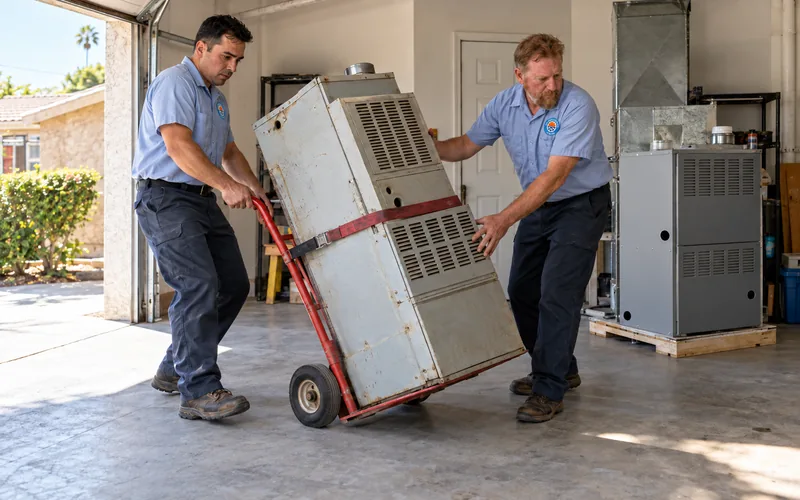
When the furnace is at the end of its working life and replacement is the question.
Explore Furnace and Heating Replacement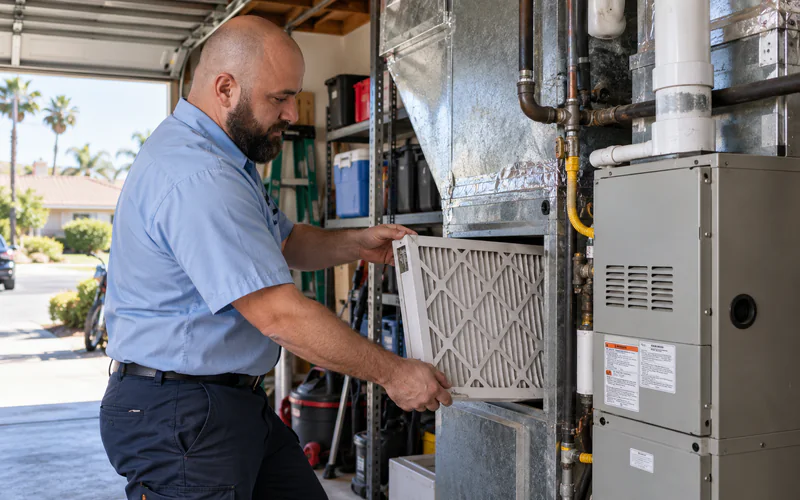
A tune-up before the season, which is how most of the faults on this page get caught early.
Explore Furnace and Heating Maintenance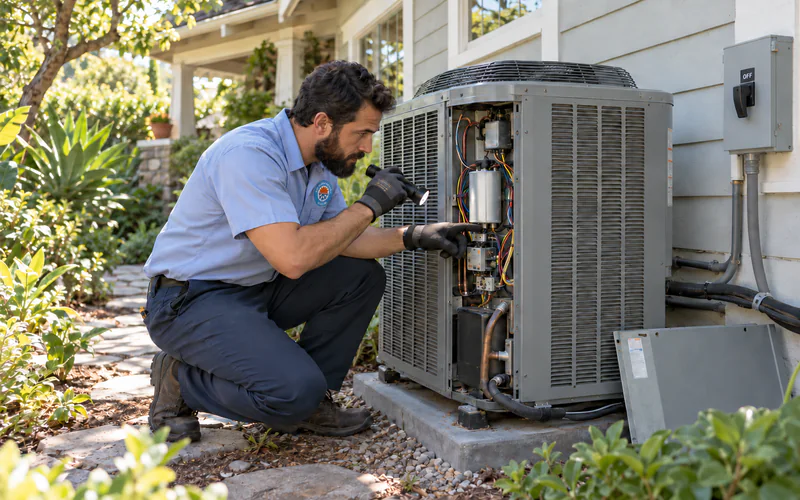
If your heating comes from a heat pump, the diagnosis is a different job.
Explore Heat Pump Repair
When some rooms heat and some do not, and the furnace itself is fine.
Explore Duct RepairA diagnosis tells you what failed, what it costs to fix, and whether fixing it is worth it. In writing, with a photo of the part, and with combustion tested.