One room is always hotter or colder than the rest, and you have given up on it
The duct run to that room is the place to start, before anyone talks about equipment.
 GVK Heating & Air Inc
(619) 277-6279
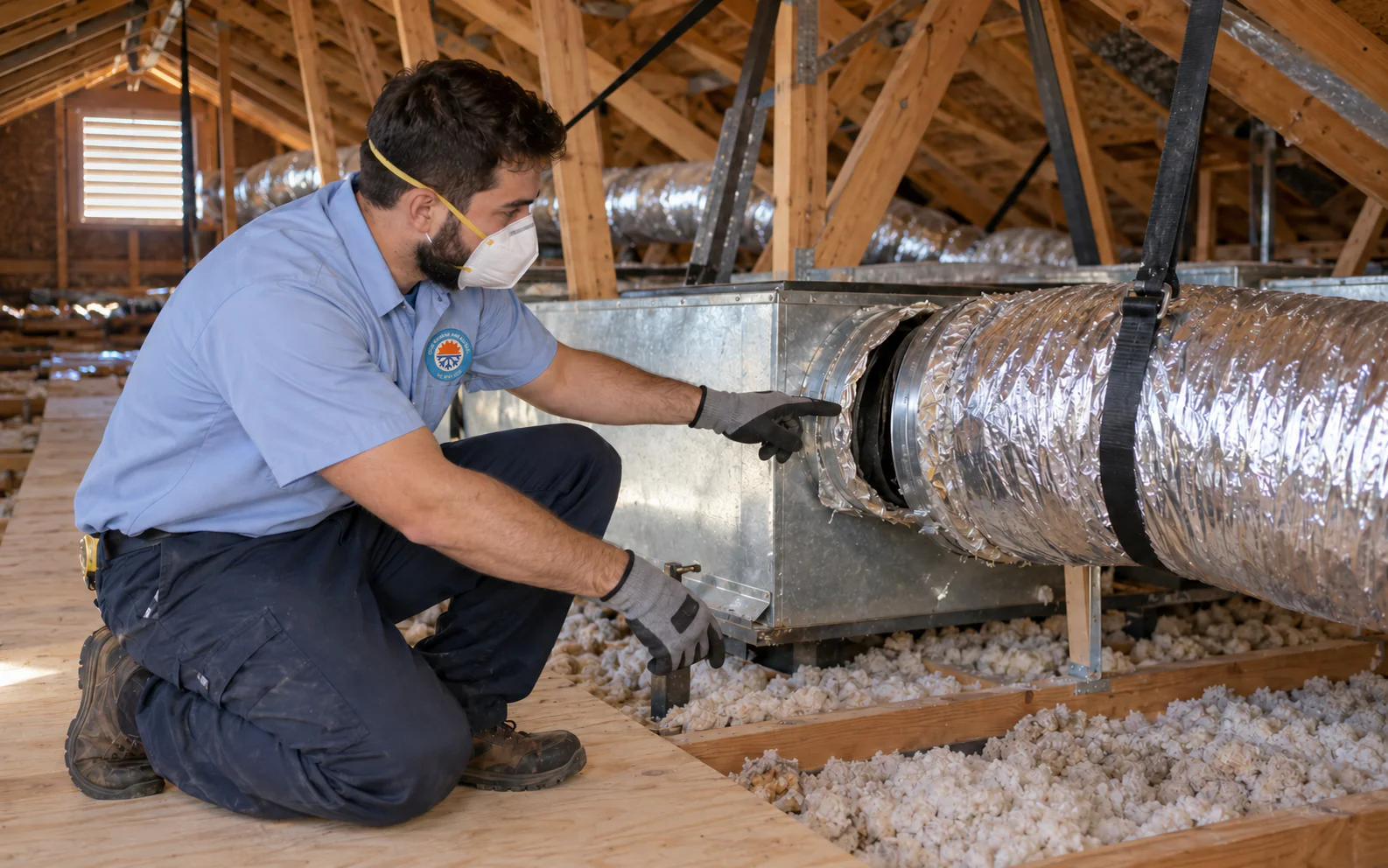
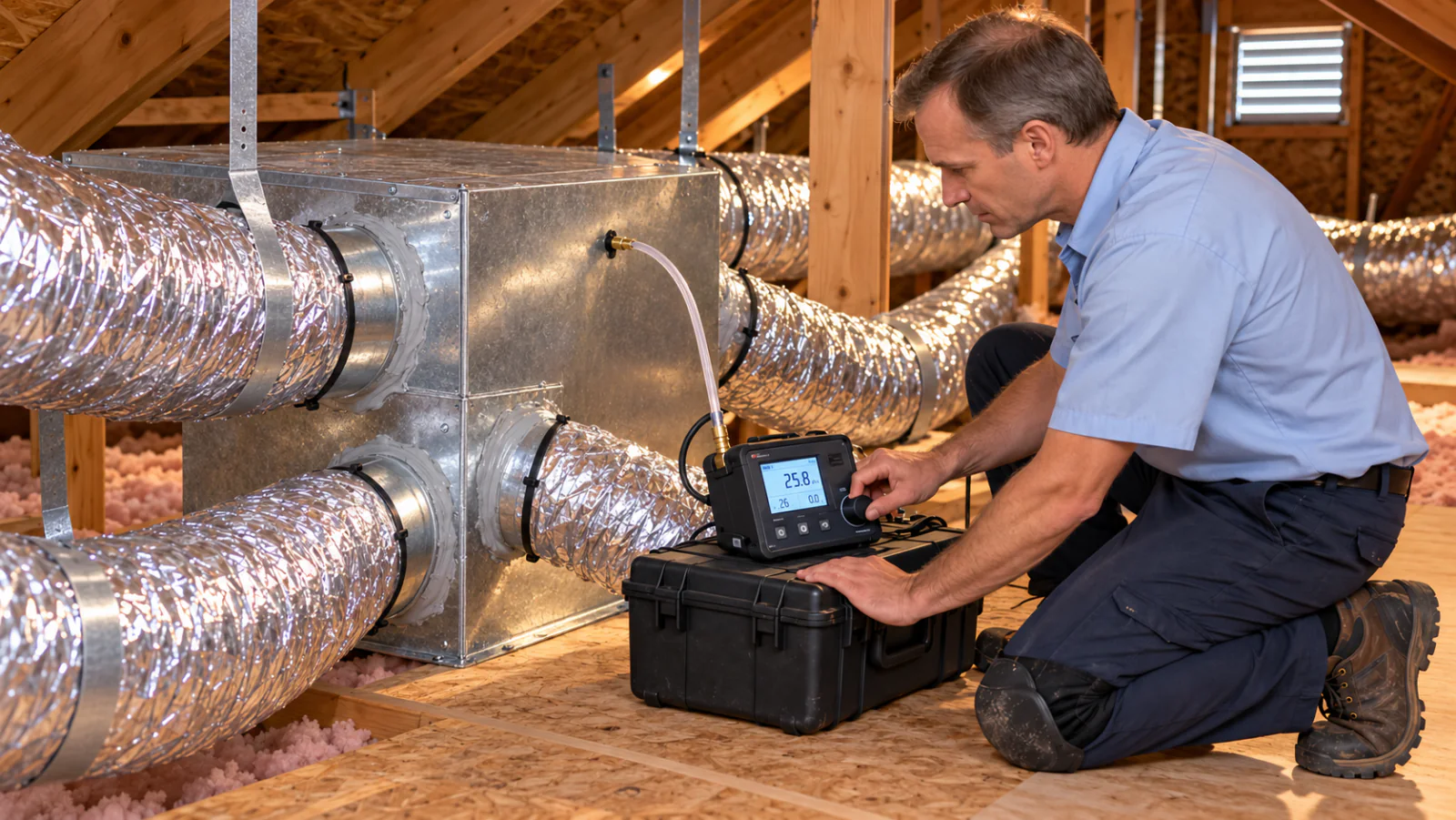
When the equipment is working and the house still does not feel right, the ducts are usually the reason. We measure the leakage, show you the number, and show it to you again after the repair.
Five things homeowners call us about. Each is a reason to have the ductwork looked at. None of them is a diagnosis.
The duct run to that room is the place to start, before anyone talks about equipment.
That is a measurement, not a guess: the system may be producing what it should and losing it before it arrives.
Leaks on the return side pull air from the attic and the crawlspace, and that air brings what is in there with it.
This is what duct leakage looks like on a statement.
Moisture and the insulation around the ducts are involved more often than the equipment is.
What we check in each group, and where a diagnosis can land.
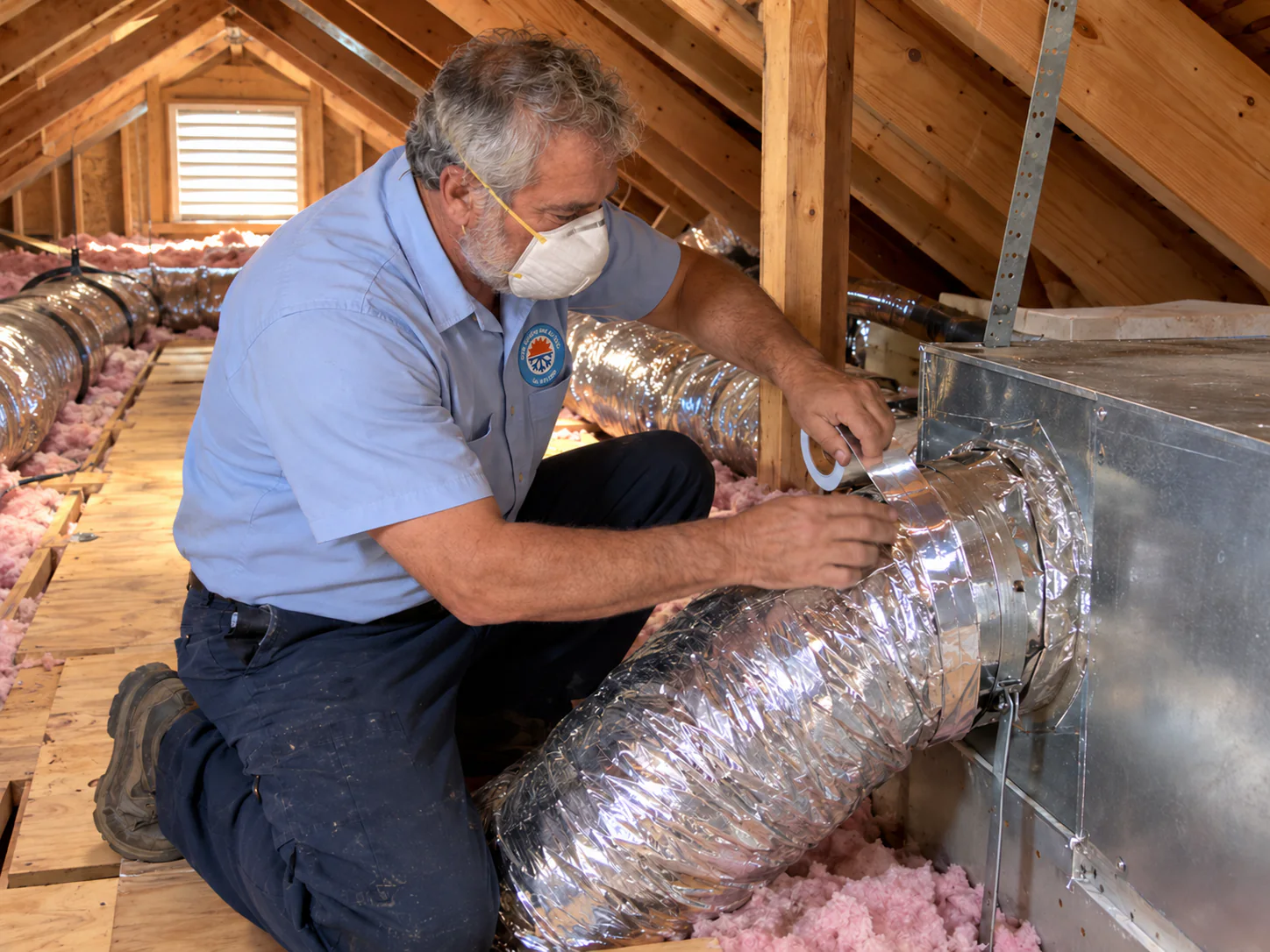
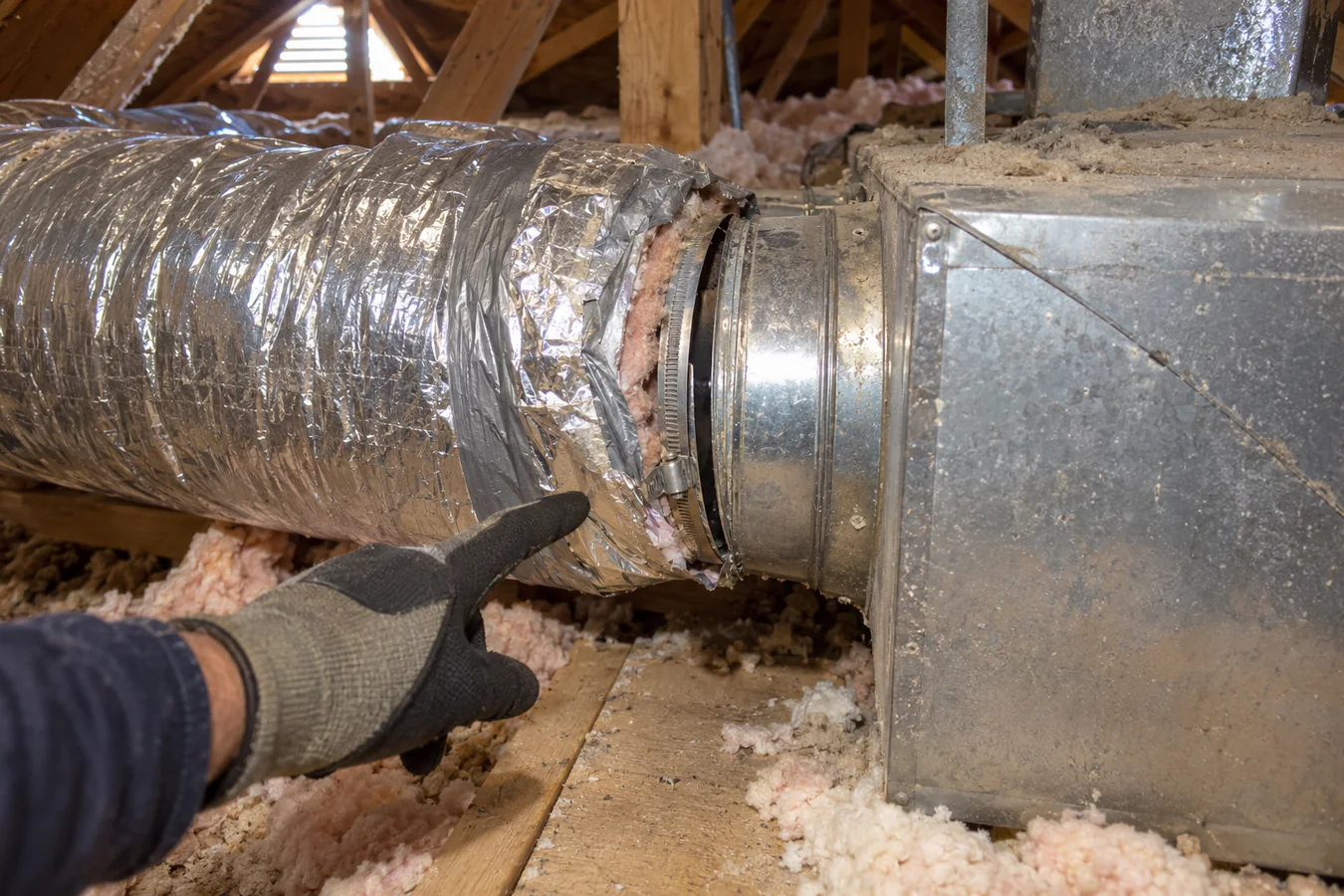
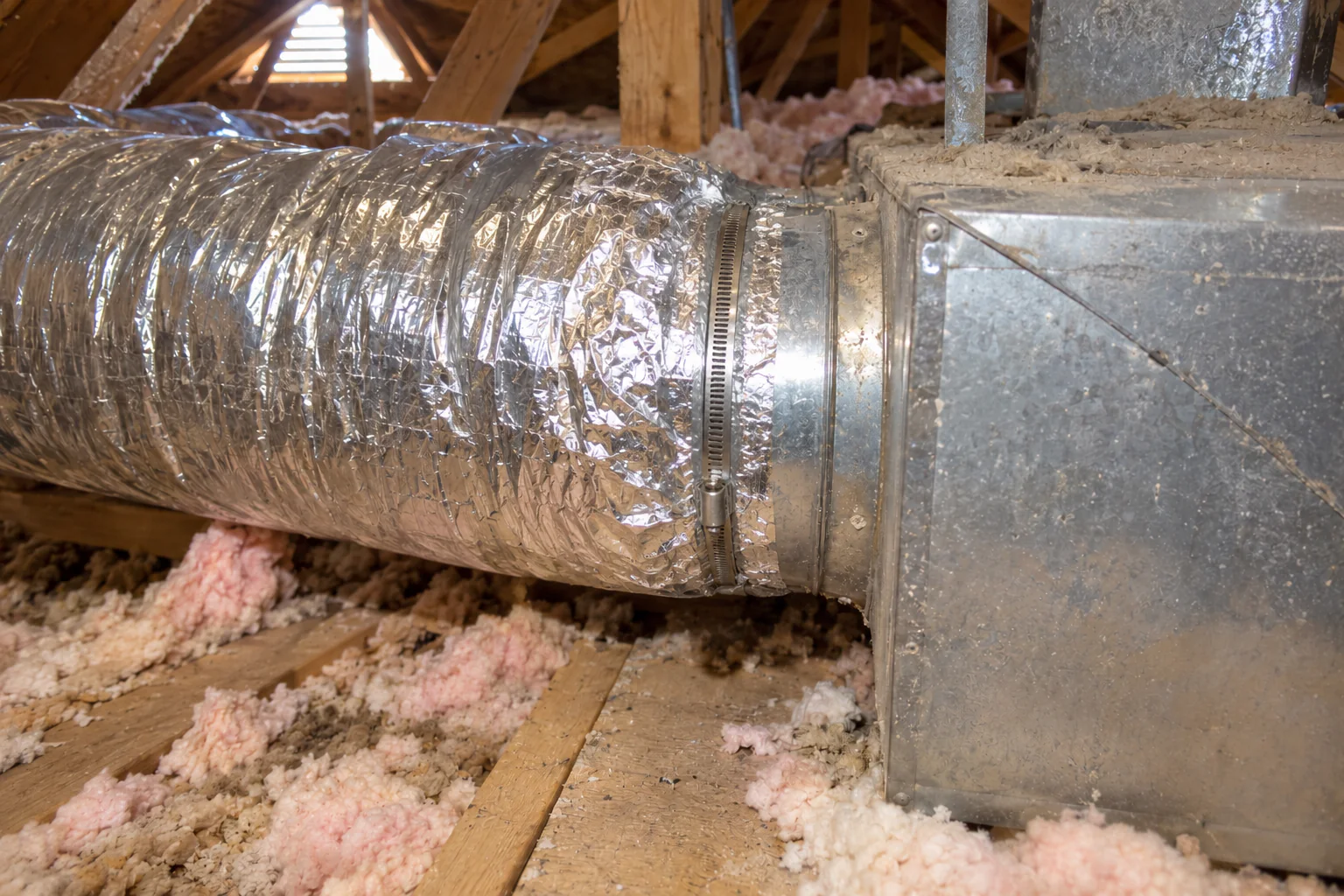
Where duct runs meet the plenum, the boots, and each other. Tape fails, mastic cracks, and connections work loose over decades. This is the largest single source of loss in most houses here.
Crushed flex, torn runs, and sections that have come away entirely. A disconnected run blows conditioned air into the attic and the room it served gets nothing.
Missing, compressed, or degraded. In an attic that gets far hotter than the outside air, insulation is what stands between your cooled air and that heat.
Runs that are too small, too long, or too restricted to deliver what the equipment produces. This is the one that makes a room unfixable until it is corrected.
Undersized returns and closed or missing dampers, which is a common cause of a system that cycles on its own limit.
Where the diagnosis lands depends on what the measurement finds: sealing, replacing a section, resizing a run, or in some houses rebuilding a substantial part of the distribution.
Here is the part of this subject that rarely makes it onto a contractor's page. In new construction, duct leakage of two to five percent is normal. In older homes it reaches forty percent and beyond.
Ductwork in older San Diego houses was not sealed the way it is sealed today. A meaningful share of the air you pay to cool never reaches a room at all. You run the system longer to get the same result, every month, for years, and the equipment wears faster because it is working against a system that leaks.
Then there is where your ducts live. Most of them run through an attic that gets much hotter in summer than the outside air. A leak up there is not a small loss, and neither is missing insulation, because the temperature difference across that duct wall is far larger than most people picture.
This is the part we would rather be judged on. Every duct repair we quote starts with a measurement, and the measurement is what the recommendation is built on.
A contractor who describes duct leakage without measuring it is guessing, and so are you when you read the quote.
Replacing ductwork in California triggers testing under the state energy code, and the person who verifies it is not us. It is an independent HERS rater, and that is the entire point of it: the verification is worth something precisely because the contractor who did the work does not sign it off.
What that means for you is simple. A contractor who skips the permit also skips the test, and then nobody has ever confirmed that your new ductwork performs the way it was sold to you.
We tell you which permits and testing apply to your scope and who coordinates them. 600+ permitted projects under our license are on public record in San Diego County.
Which rooms never work, what the airflow feels like, and what the bill has been doing. Two minutes on the phone.
Always in that order. We look at the accessible ductwork, measure the leakage and the airflow, and photograph what we find.
The measurement, the pictures of the joints and sections involved, then the price.
What gets sealed, what gets replaced, what gets resized, and what it costs. Nothing starts until you approve it.
You get the after number against the before number, and where testing applies, an independent rater verifies it.
We price after the inspection, because duct work varies more between houses than equipment does.
What affects the price
After the inspection, every line goes in writing
Total price
Where sealing gets you most of the result for a fraction of a full replacement, we will say so and price that first.
Request a Duct Inspection
Before and after. It is the one claim on this page you can check, and it is the reason the rest of it is worth reading.
The joints, the disconnected runs, the compressed insulation. You see the problem itself.
Where the airflow comes back with sealing and a couple of sections, that is what we quote. Rebuilding a distribution system that mostly works is not in your interest.
A HERS rater confirms the work, not us. That is what makes it worth having.
License #911659, bonded and insured. A 4.9 rating across 300+ reviews on Yelp and Google, and 600+ permitted projects on public record.

“My impression of George is that he's a very honest person who takes a lot of pride in providing a high quality service.”
Read on Yelp
“It was very clear that it was important to him that his service is high quality.”
Read on Google“We live in South Orange County and GVK Heating and Air were recommended to us — specifically Denys at GVK.”
Read on Yelp“They performed the first AC installation on my 30-year-old home.”
Read on Google“He wants to meet your needs at a good price and he is a pleasure to work with.”
Read on GoogleWe are based in Poway and work across all of San Diego County: repairs, replacements, maintenance, and tune-ups.
We measure. Airflow at the registers against what the equipment should be producing tells us where the loss is happening. If the equipment is the problem, we will tell you that instead, and it becomes an AC Repair or Furnace and Heating Repair job.
Often yes, and where sealing gets you most of the result, that is what we quote. Replacement becomes the answer when runs are crushed, badly undersized, or too degraded to hold a seal.
Cleaning and sealing are different services solving different problems. Cleaning removes what is inside the duct. Sealing stops air escaping from it. Ask us what your house needs, because the two get sold as though they were the same thing.
It should reduce waste, and we will not put a percentage on it. What we can do is show you the leakage before and after, which is the measurable part. What that turns into on your statement depends on your tariff and your habits.
Sealing repairs generally do not. Replacing ductwork triggers testing under the state energy code, verified by an independent HERS rater. We tell you which applies to your scope before anything starts.
Sealing accessible joints is often a single visit. Replacing runs or resizing the distribution takes longer, and attic access in summer affects how much of a day is usable. Your scope gives you the schedule.
Usually not. Most of the ductwork in houses here is reachable from the attic or the crawlspace. Where something is buried, we tell you at the inspection, before anything gets opened.
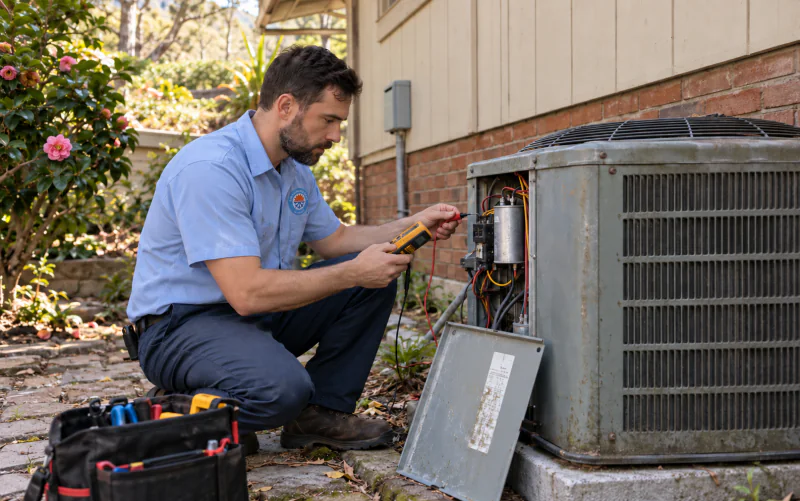
When the equipment itself has stopped or is running badly.
Explore AC Repair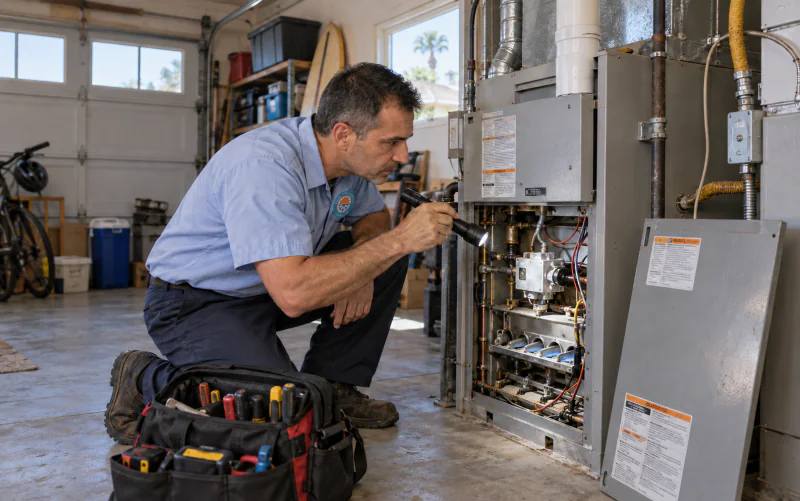
When the furnace is the problem, not the distribution.
Explore Furnace and Heating Repair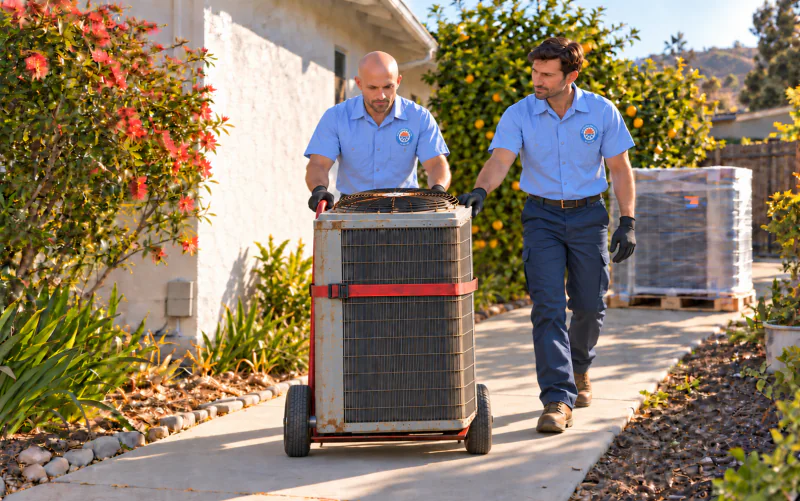
When the system is being replaced, which is the practical moment to correct the ducts too.
Explore AC Replacement
When you want both systems and the shared airflow checked in one visit.
Explore HVAC Tune-UpTell us which rooms never work. We will inspect the ductwork, measure the leakage, show you the photographs and the number, and give you a written scope with the price.