It runs but the house stays warm
Air is moving and the temperature is not dropping. The cause can sit in the refrigerant circuit, in the electrical components, or in the coils, and the three need different repairs.
 GVK Heating & Air Inc
(619) 277-6279
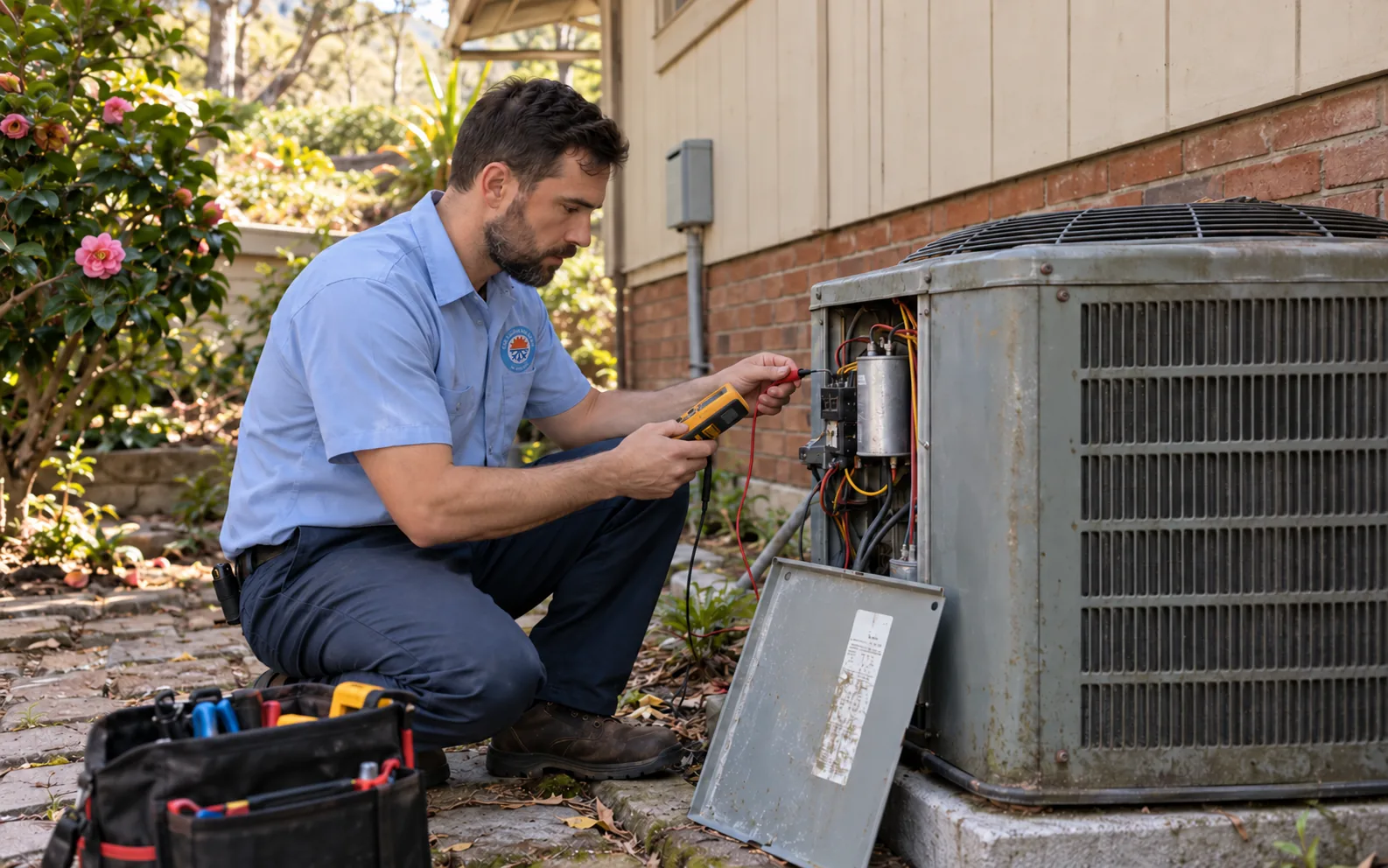
Tell us what the system is doing and we will find the actual fault. You see a photo of what failed and the price in writing before we touch anything.
Six things homeowners call us about. None of them is a diagnosis on its own, because the same symptom comes from several different faults.
Air is moving and the temperature is not dropping. The cause can sit in the refrigerant circuit, in the electrical components, or in the coils, and the three need different repairs.
Short cycling puts more wear on a system than anything else on this list. It needs looking at before the compressor takes the damage.
Ice on a cooling system means it is struggling. Turn it off and call, because running it in that state is how compressors fail.
Grinding, clicking, and screeching come from different places in the system. A recording on your phone tells us more than a description does.
A burning smell means shut the system off at the breaker and call today. A musty smell points at moisture somewhere in the system and needs a look.
Both mean the system is behaving differently than it did, and both cost less to check than to leave.
Six groups of faults, what we check in each, and where a diagnosis can land.
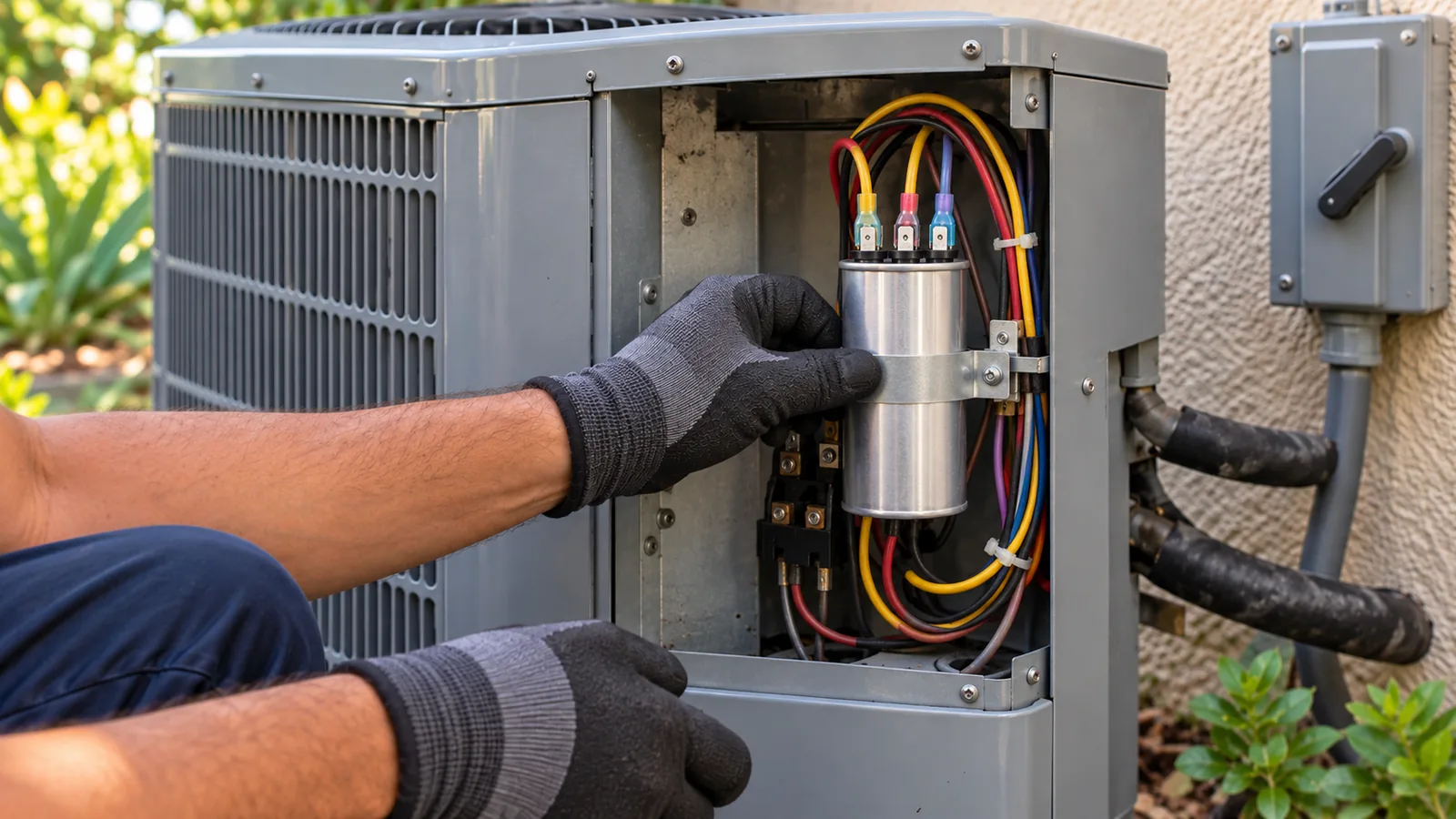
Capacitors, contactors, disconnects, and connections. We check the starting components, the contacts, and the wiring for burning and corrosion. These are the most common failures we see, and usually the quickest to resolve.
Thermostats, control boards, sensors, and the wiring between them. We confirm what the system is being told to do before we look at whether it can do it.
Blower motors, condenser fans, and the restrictions that make a system work harder than it has to. We measure whether the system is moving the air it is supposed to move, because restricted airflow imitates several other faults.
Charge level, leaks, and the compressor. We find the leak and repair it. A recharge on its own means the same service call again once the refrigerant leaks back out.
Evaporator and condenser coils. We check whether they are clean, intact, and able to shed heat, which is a frequent cause of a system that runs constantly without cooling the house.
Condensate lines, pans, and pumps. We check for blockages and cracks, which is usually what water under the indoor unit turns out to be.
We are a C-20 contractor, so HVAC is the only thing we do. There is no plumbing division to hand you off to.
Where the diagnosis lands depends on what it finds: a repair we can price on the spot, a part we need to source first, or a conversation about whether this system is worth another repair.
We are on your side on this one. Most of what we get called out for is worth repairing, and when it is, we repair it and say so.
There are a few situations where another repair is money into a system that will ask for more. A failed compressor. R-22 in the lines, where the refrigerant itself gets more expensive every year. A third service call in two summers on the same equipment.
When we are in one of those situations, we tell you what the repair costs, what a replacement costs, and what each one buys you. You decide. If replacement is the direction, that conversation continues on our AC Replacement page.
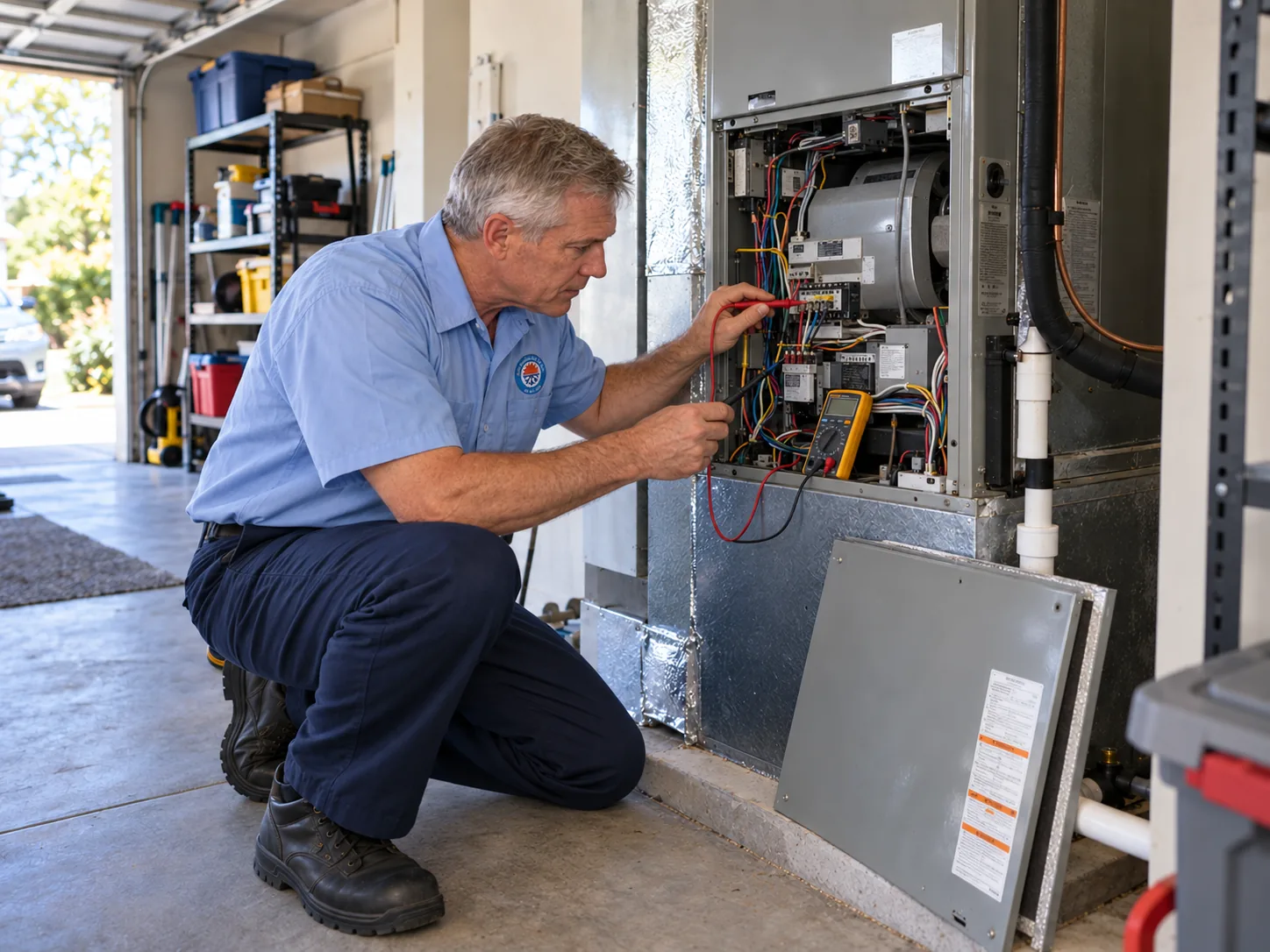
Two minutes on the phone so we bring the right parts.
Always in that order. A price named against a symptom is a guess, and you are the one who pays for the guess.
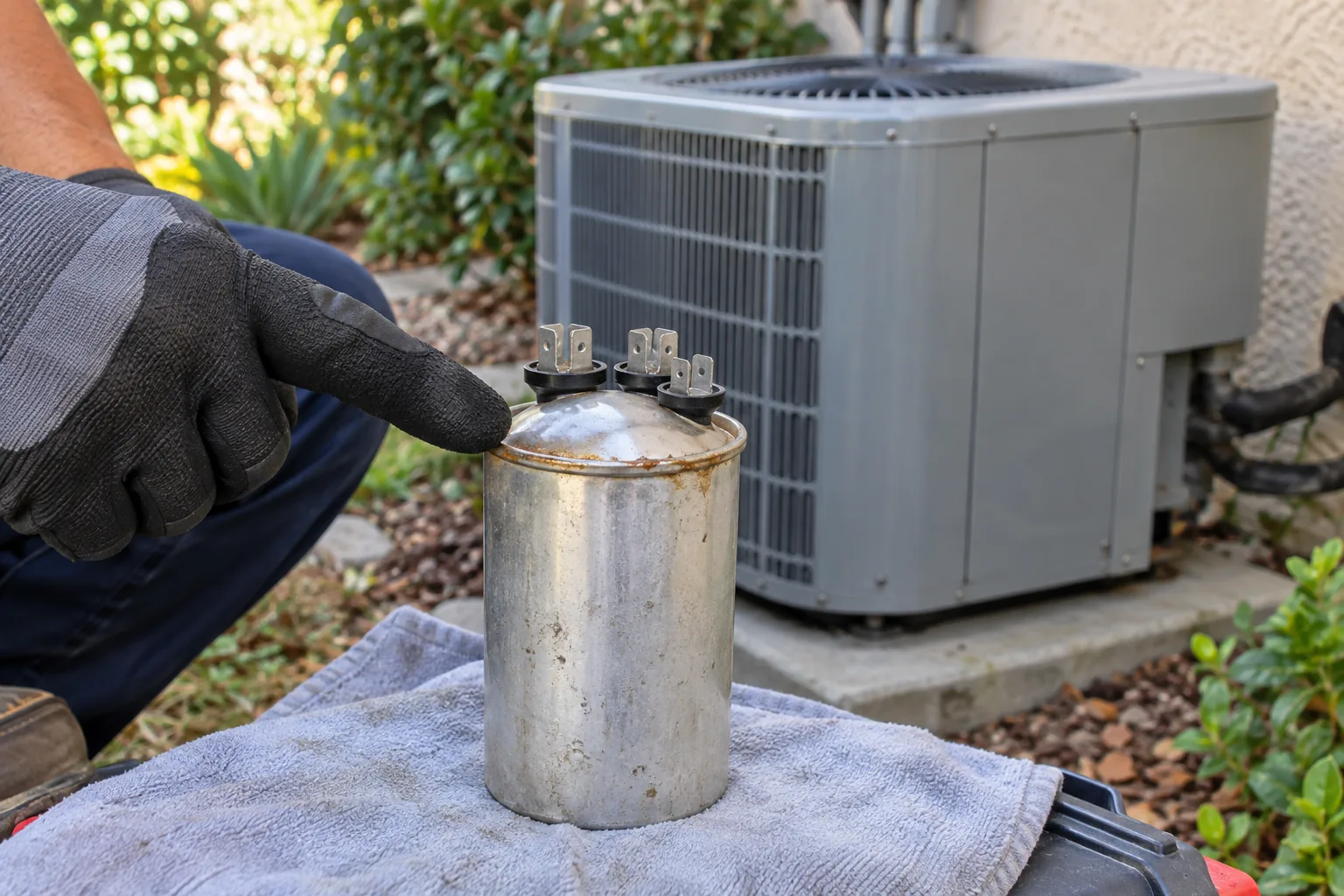
We photograph the failed component and show it to you, then we talk about price.
Before any work starts. If the repair turns up a second problem, we come back to you before we go further.
We confirm the system is performing, clean up, and tell you what to watch for.
We price the repair after we know what failed, so the number you get is the number for your fault.
What affects the price
You get the repair price at the end of the diagnostic visit, in writing
Repair price
Nothing gets done until you approve it.
Schedule a Diagnostic Visit
We find the cause first. Nothing gets quoted against a symptom, and nothing gets recommended before we know what failed.
We photograph the failed component and show it to you, along with what happens to the rest of the system if it stays that way.
The scope and the number are in writing before anything starts. If the repair turns up a second problem, that comes back to you before we go any further.
Where the system can be kept running sensibly, we keep it running and we say so. Replacement comes up when the numbers stop working, and not before.
We confirm the system is performing after the repair, and we tell you what to watch for.
A C-20 contractor since 2003. License #911659, bonded and insured. A 4.9 rating across 300+ reviews on Yelp and Google, and 600+ permitted projects on public record in San Diego County.
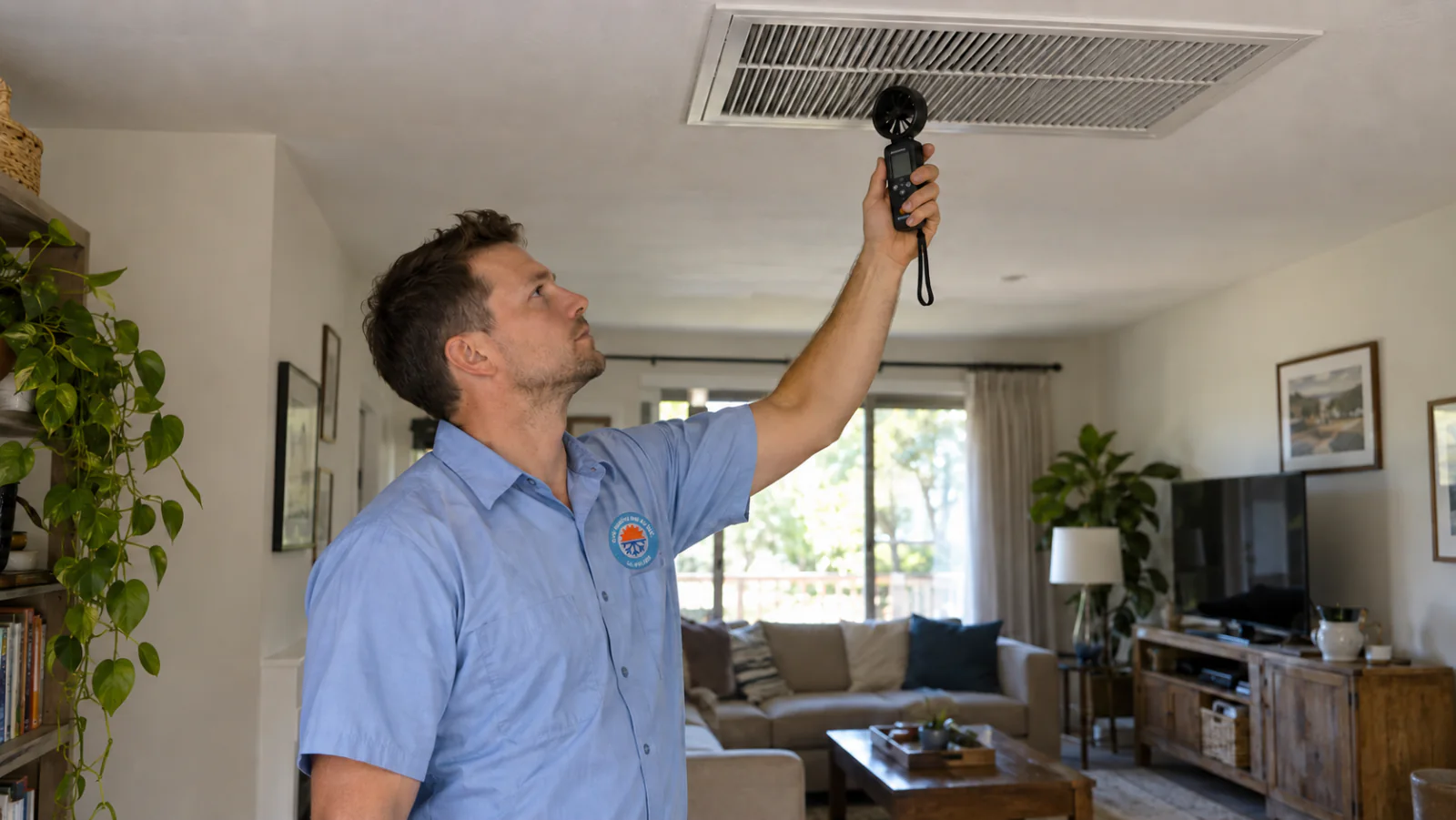

“My impression of George is that he's a very honest person who takes a lot of pride in providing a high quality service.”
Read on Yelp
“It was very clear that it was important to him that his service is high quality.”
Read on Google“We live in South Orange County and GVK Heating and Air were recommended to us — specifically Denys at GVK.”
Read on Yelp“They performed the first AC installation on my 30-year-old home.”
Read on Google“He wants to meet your needs at a good price and he is a pleasure to work with.”
Read on GoogleWe are based in Poway and work across all of San Diego County: repairs, replacements, maintenance, and tune-ups.
Ask us what the visit costs when you call and we will tell you before we come out. The repair price comes at the end of that visit, in writing, once we know what failed. Both numbers reach you before the work, not on the invoice afterwards.
Tell us the brand and model when you get in touch and we will confirm before the visit. We work on central split systems, mini splits and ductless systems, and roof top package units.
If there is a burning smell, ice on the lines, or water pooling, turn it off at the breaker and leave it off. Otherwise leave it as it is, because a fault we can watch happening is easier to find than one we have to reproduce.
We carry the components that fail most often. Anything discontinued or unusual gets sourced. You get the timing and the price before you approve it, so the job does not sit open with your house warm.
When the same system keeps costing you money: a failed compressor, R-22 in the lines, a third call in two summers. We bring the repair price and the replacement price to the same visit so you can see both.
Repairs generally do not. Replacing the system does, and California requires HERS testing on most replacement work. If your repair turns out to be a replacement, we tell you what that changes about permits and scheduling before anything is decided.
We confirm your address and what the system is doing, tell you the first day we can be there, and confirm the visit with you. Describing the symptoms in the form means we arrive with the right parts on the truck.
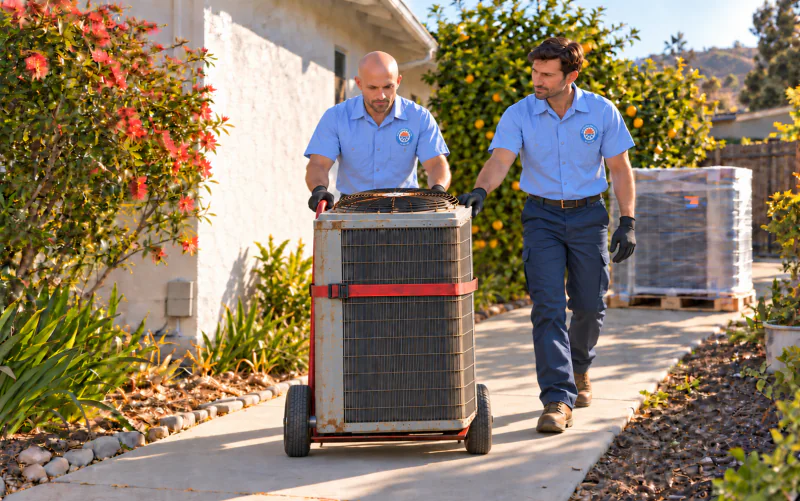
When the repair arithmetic stops working and a new system is the better answer.
Explore AC Replacement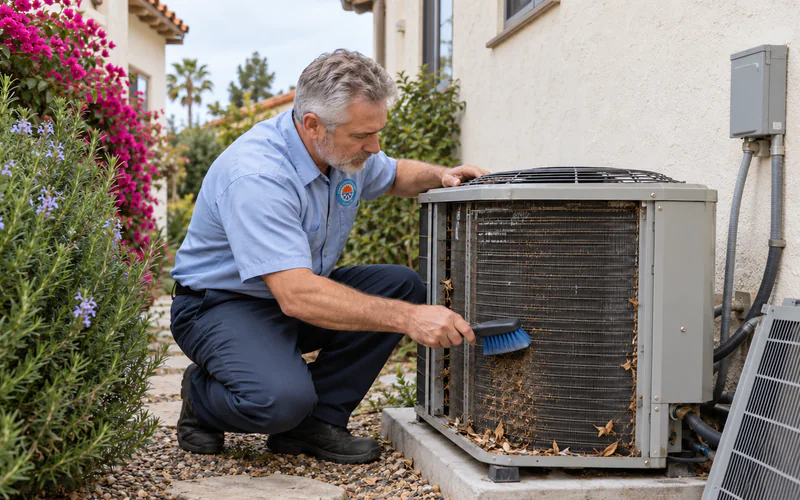
Inspection and tune ups, which is how most of the failures on this page get caught early.
Explore AC Maintenance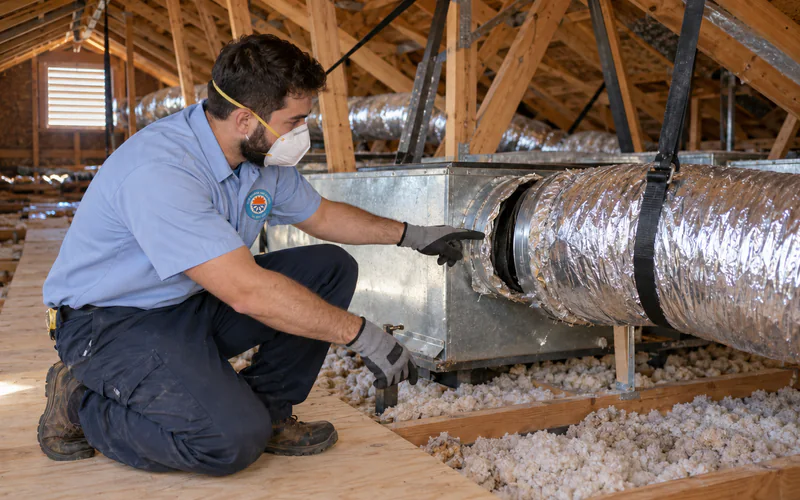
When the equipment is fine and airflow is the actual problem.
Explore Duct Repair
When cooling is going into a space that has never had it.
Explore AC InstallationA diagnosis tells you what failed, what it costs to fix, and whether fixing it is worth it. In writing, with a photo of the part.