We inspect, cooling side
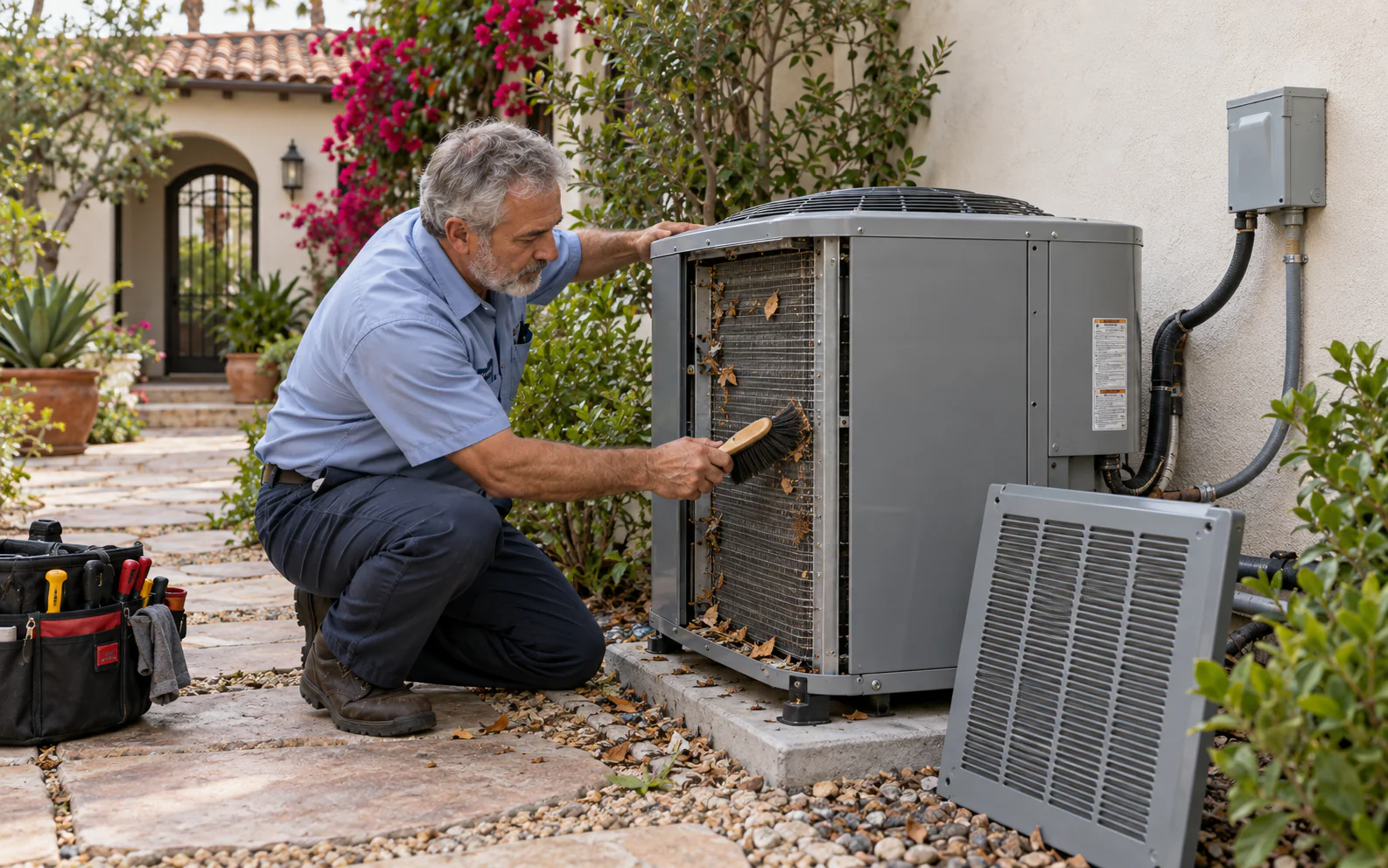
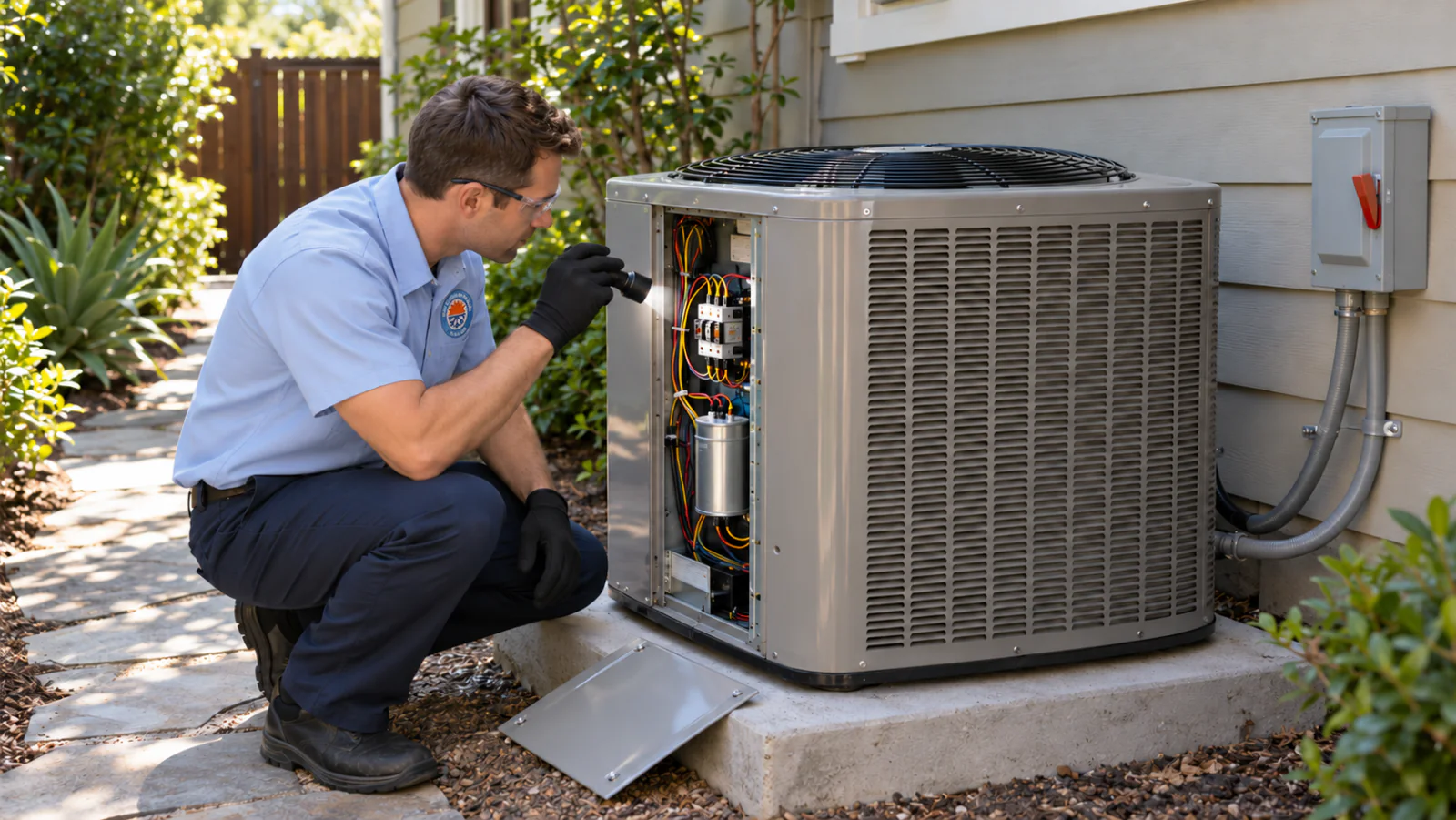
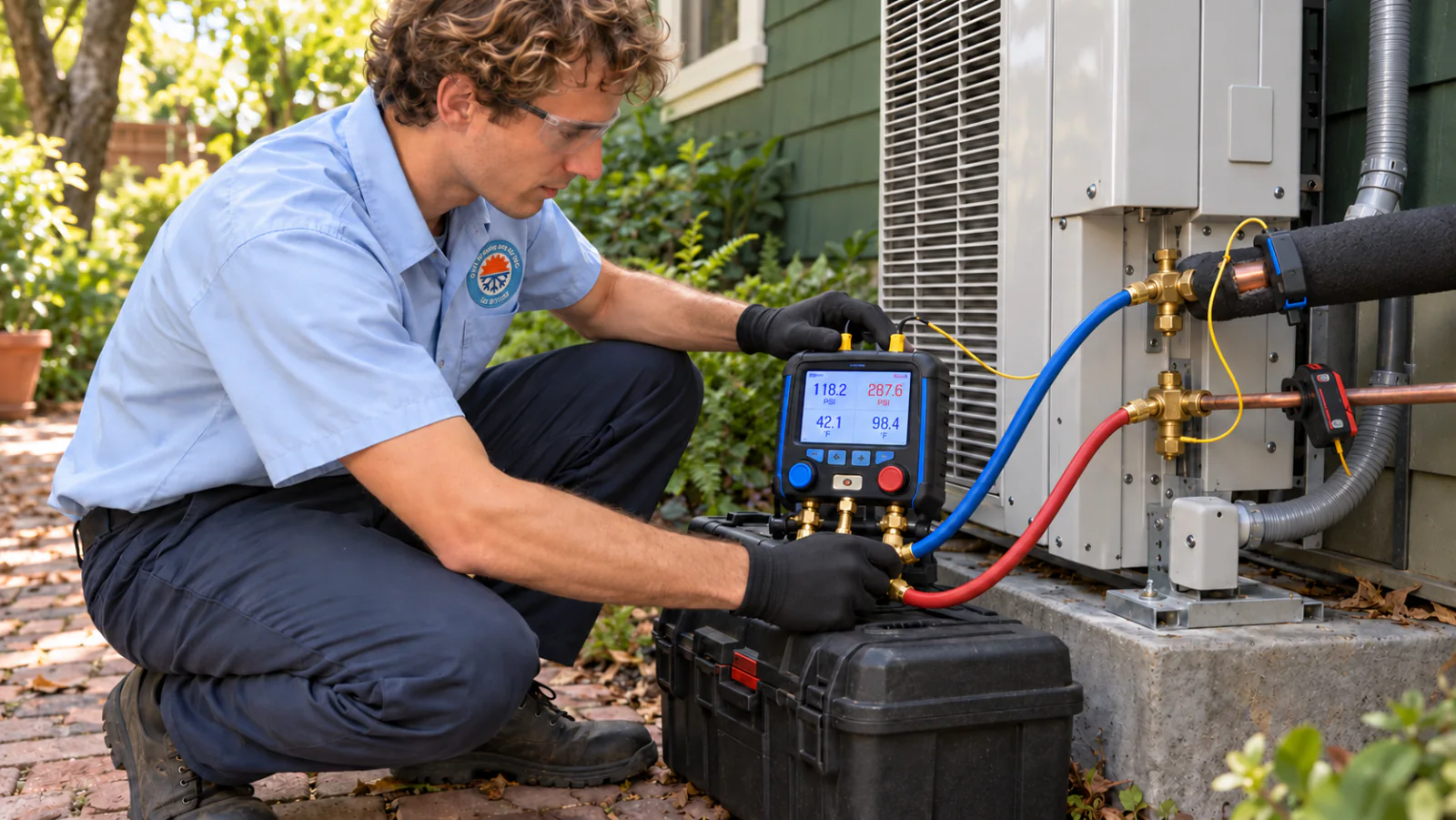
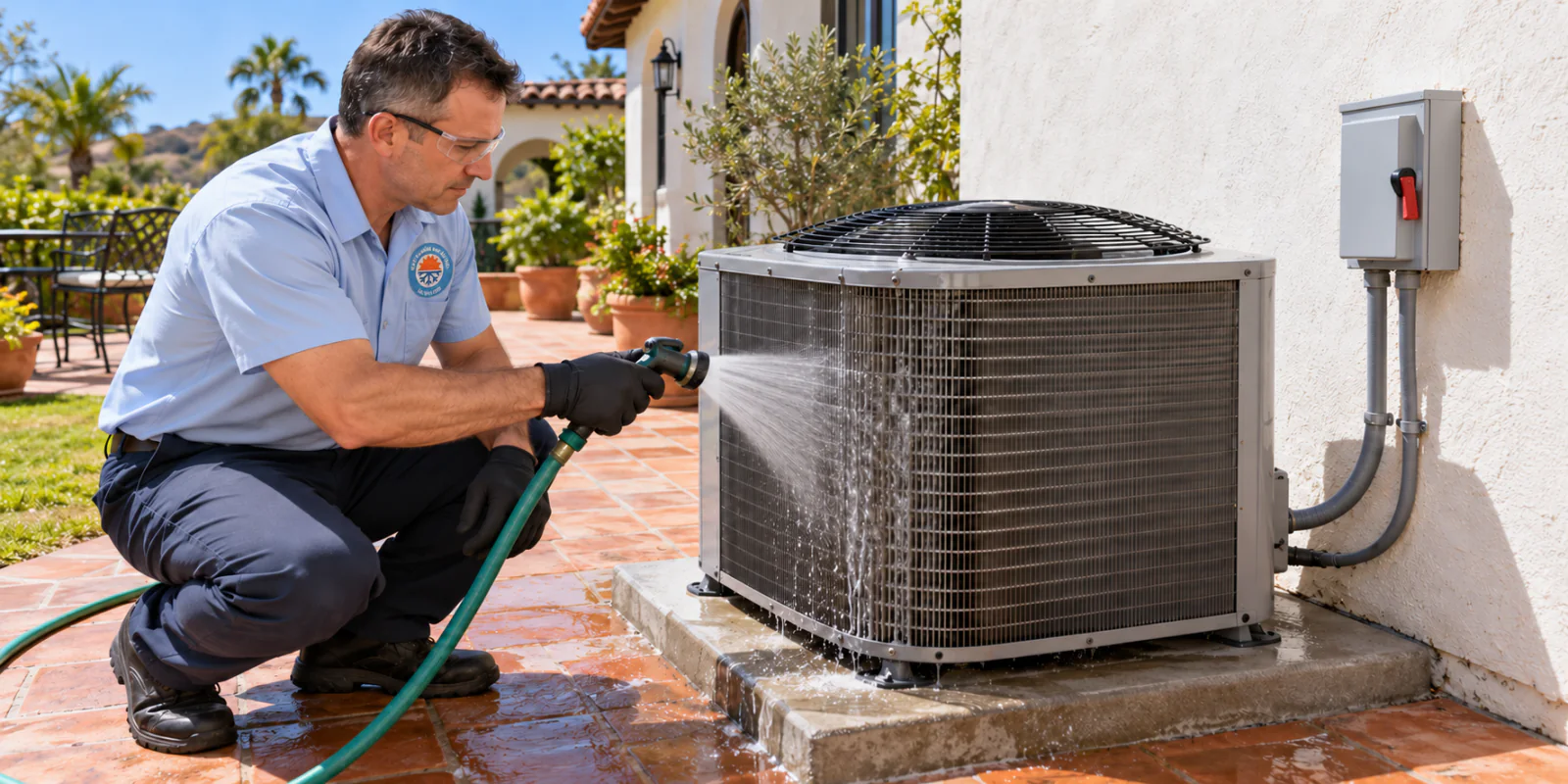
Refrigerant charge and operating pressures. The condenser and evaporator coils. The electrical components, contactor, and capacitor. The blower and the airflow it produces. The condensate drain and pan.
 GVK Heating & Air Inc
(619) 277-6279
A heat pump does two jobs on one set of equipment, so it needs checking in both directions. We service the cooling side, the heating side, and the parts that only exist on a heat pump. If the system has stopped working properly, start with Heat Pump Repair.
An air conditioner works for one season and rests for the other. A heat pump works in both, so it accumulates roughly twice the operating hours of a cooling only system of the same age. A ten year old heat pump has done what a twenty year old air conditioner has done.
There are also components that simply do not exist on a furnace or an air conditioner: the reversing valve that switches the system between modes, the defrost control that keeps the outdoor coil clear in winter, and the backup electric heat that carries the coldest hours. None of those get checked by a standard AC tune-up. A checklist has no line for a part the equipment does not have.
One thing it does not need: there is no combustion, so there is no flue, no gas valve, and no carbon monoxide test.
Three groups: what we inspect, what we service, and what is priced separately.
Refrigerant charge and operating pressures. The condenser and evaporator coils. The electrical components, contactor, and capacitor. The blower and the airflow it produces. The condensate drain and pan.
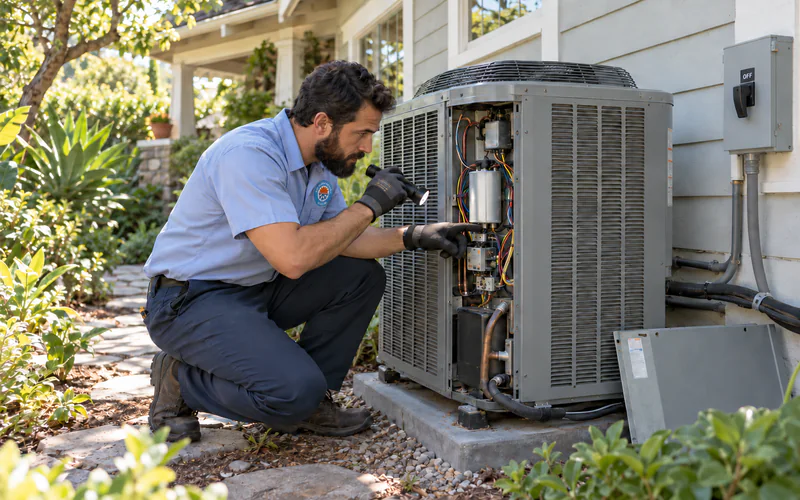
The reversing valve and its operation in both directions. The defrost control and the outdoor coil condition. The backup electric heat elements and their sequencing. The outdoor sensors the defrost cycle depends on. The thermostat's changeover behavior between modes.
Clean the outdoor coil, which on a heat pump also matters in winter. Clear the condensate drain. Tighten the electrical connections. Check and adjust airflow. Run the system in cooling, then switch it to heating and confirm it makes the changeover and holds temperature in both.
Filters, refrigerant, and any part that needs replacing. A fault we find during the visit does not go on the same invoice: it gets its own written scope and price.
The single most heat pump specific failure. It shows up as a system that performs in one mode and not the other, and it is much easier to catch on a test than on the first cold night.
Backup electric heat is expensive to run. A system leaning on it is a system not doing its main job, and the first place most people notice is the bill.
Ice that stays on the outdoor coil, or a system that defrosts constantly. Both strain the compressor and both are cheap to correct early.
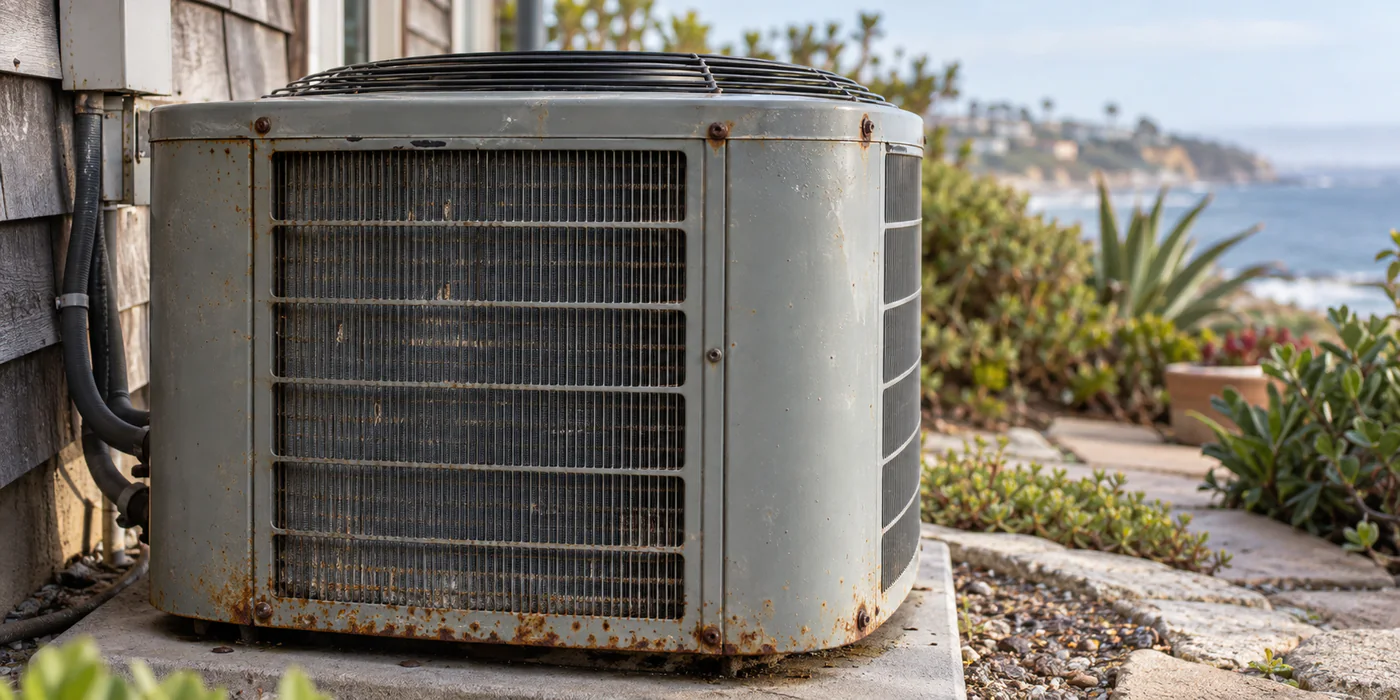
Close to the coast, coil fins and electrical contacts corrode years earlier than they do inland. The outdoor unit on a heat pump runs year round, so it gets more exposure than an air conditioner does.
What a tune-up does not do. It does not guarantee nothing will break, and it does not come with a fixed cut in your bill or a set number of extra years on the system. What you get is the condition of the system in both modes and a list of what needs attention.
Twice a year is the working answer for a heat pump, in spring and in fall, because the system changes jobs and each mode has its own failure points. That is genuinely different from an air conditioner, where once a year before summer is enough.
If you would rather do one visit, do it in fall. The heating side and the defrost function are what go unnoticed until the weather turns, and the cooling side gives you more warning.
The manufacturer's own requirement takes precedence over any general rule, and some warranties are written around it. Tell us the equipment and we will tell you what applies. Check your own paperwork too: many manufacturer warranties require documented annual maintenance to stay in force.
Tell us the system, how many units, what times work for you, and anything you noticed in either season. We confirm the date and the time window.
Before we come out, you know which checks and service tasks are in your tune-up, and what it costs.
We work through the cooling side, the heating side, and the heat pump specific components.
We run the system in cooling, switch it to heating, confirm the changeover, then tell you the condition it is in and what we recommend.
If we find a fault, it gets its own scope and price. Nothing extra happens on the day without your approval.
You get the price when you book, before we come out.
What affects the price
At the end of the visit, you hear what we found
Tune-up price
A repair found during the visit is quoted separately and never folded into the tune-up price.
Schedule Heat Pump Maintenance
We run the system in cooling and in heating and confirm the changeover. A heat pump serviced on an AC checklist has had half its components looked at.
Reversing valve, defrost control, outdoor sensors, and the backup heat sequencing.
What was checked, what was serviced, and what needs attention, including what can wait and roughly how long.
A fault found during a tune-up gets its own written scope and price. The visit stays the visit you booked.
License #911659, bonded and insured. A 4.9 rating across 300+ reviews on Yelp and Google, and 600+ permitted projects on public record.

“My impression of George is that he's a very honest person who takes a lot of pride in providing a high quality service.”
Read on Yelp
“It was very clear that it was important to him that his service is high quality.”
Read on Google“We live in South Orange County and GVK Heating and Air were recommended to us — specifically Denys at GVK.”
Read on Yelp“They performed the first AC installation on my 30-year-old home.”
Read on Google“He wants to meet your needs at a good price and he is a pleasure to work with.”
Read on GoogleWe are based in Poway and work across all of San Diego County: repairs, replacements, maintenance, and tune-ups.
Twice a year is the working answer, in spring and fall, because the system does two different jobs and each has its own failure points. If you do one visit, do it in fall: the heating side is the half that goes unnoticed until the weather turns.
No, and this matters. An AC checklist does not include the reversing valve, the defrost control, the outdoor sensors, or the backup heat elements, because an air conditioner does not have them. That is why we run two lists and test the changeover between them.
The checks and service tasks are listed above, across both modes. It is a single visit, and we give you the time window when we confirm. The length depends on how many systems are being serviced and their condition.
No. The visit covers the inspection and the agreed service tasks. Filters, refrigerant, and replacement parts are priced separately, and we tell you the cost before we fit anything.
You get a written scope and price for that repair, separate from the tune-up. Whether we do it is your call, and it can wait for another visit.
No. We do not run a membership program, so there is nothing to subscribe to, renew, or cancel. You book the visit you want, when you want it.
Often yes. Many manufacturer warranties require documented annual maintenance, and some are specific about what counts. Read your own paperwork, and we will give you documentation of what was done either way.
When the system has stopped or is underperforming in one mode or both.
Explore Heat Pump Repair
When a system with both seasons behind it is coming to the end of its life.
Explore Heat Pump Replacement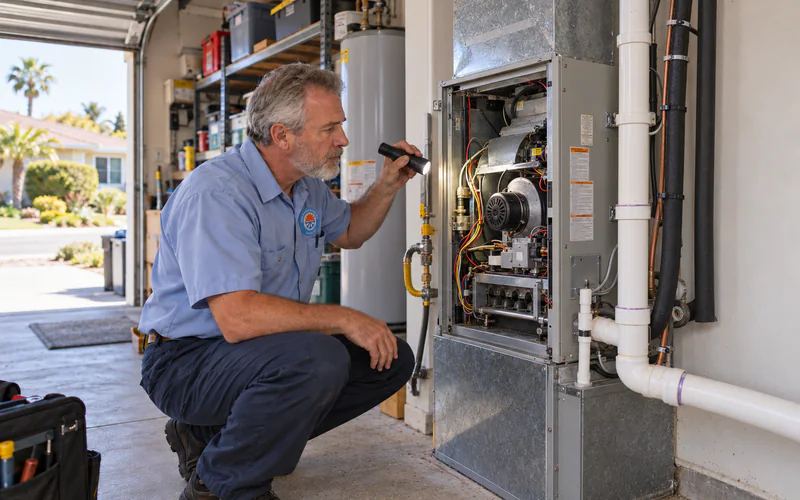
If the house has separate heating and cooling equipment.
Explore HVAC Tune-Up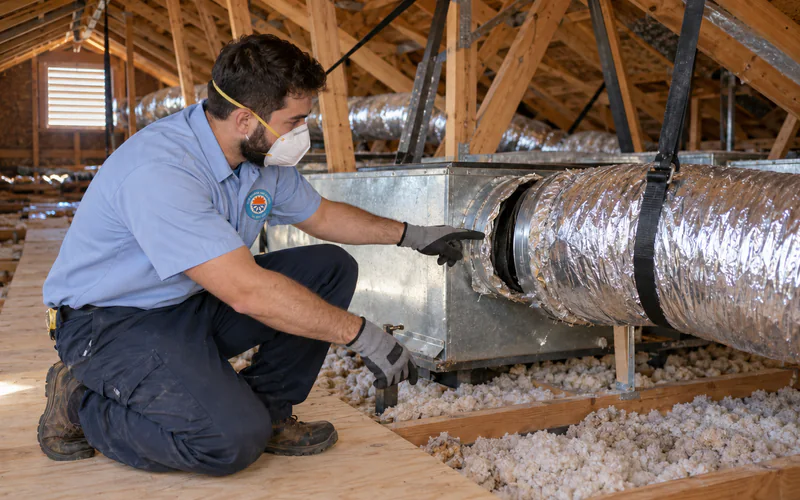
When rooms have never performed evenly and the equipment is not the reason.
Explore Duct RepairBook the visit and you get the checklist and the price before we arrive, and the condition of the system in both modes when we are done.